Cytoplasmic polyadenylation element-binding protein 3 (CPE-BP3) (CPE-binding protein 3) (hCPEB-3)
1_MQDDL 6_ LMDKS 11_ KTQPQ 16_ PQQQQ 21_ RQQQQ 26_ PQPES 31_ SVSEA 36_ PSTPL 41_ SSETP 46_ KPEEN 51_ SAVPA 56_ LSPAA 61_ APPAP 66_ NGPDK 71_ MQMES 76_ PLLPG 81_ LSFHQ 86_ PPQQP 91_ PPPQE 96_ PAAPG 101_ ASLSP 106_ SFGST 111_ WSTGT 116_ TNAVE 121_ DSFFQ 126_ GITPV 131_ NGTML 136_ FQNFP 141_ HHVNP 146_ VFGGT 151_ FSPQI 156_ GLAQT 161_ QHHQQ 166_ PPPPA 171_ PAPQP 176_ AQPAQ 181_ PPQAQ 186_ PPQQR 191_ RSPAS 196_ PSQAP 201_ YAQRS 206_ AAAAY 211_ GHQPI 216_ MTSKP 221_ SSSSA 226_ VAAAA 231_ AAAAA 236_ SSASS 241_ SWNTH 246_ QSVNA 251_ AWSAP 256_ SNPWG 261_ GLQAG 266_ RDPRR 271_ AVGVG 276_ VGVGV 281_ GVPSP 286_ LNPIS 291_ PLKKP 296_ FSSNV 301_ IAPPK 306_ FPRAA 311_ PLTSK 316_ SWMED 321_ NAFRT 326_ DNGNN 331_ LLPFQ 336_ DRSRP 341_ YDTFN 346_ LHSLE 351_ NSLMD 356_ MIRTD 361_ HEPLK 366_ GKHYP 371_ PSGPP 376_ MSFAD 381_ IMWRN 386_ HFAGR 391_ MGINF 396_ HHPGT 401_ DNIMA 406_ LNNAF 411_ LDDSH 416_ GDQAL 421_ SSGLS 426_ SPTRC 431_ QNGER 436_ VERYS 441_ RKVFV 446_ GGLPP 451_ DIDED 456_ EITAS 461_ FRRFG 466_ PLVVD 471_ WPHKA 476_ ESKSY 481_ FPPKG 486_ YAFLL 491_ FQEES 496_ SVQAL 501_ IDACL 506_ EEDGK 511_ LYLCV 516_ SSPTI 521_ KDKPV 526_ QIRPW 531_ NLSDS 536_ DFVMD 541_ GSQPL 546_ DPRKT 551_ IFVGG 556_ VPRPL 561_ RAVEL 566_ AMIMD 571_ RLYGG 576_ VCYAG 581_ IDTDP 586_ ELKYP 591_ KGAGR 596_ VAFSN 601_ QQSYI 606_ AAISA 611_ RFVQL 616_ QHNDI 621_ DKRVE 626_ VKPYV 631_ LDDQM 636_ CDECQ 641_ GTRCG 646_ GKFAP 651_ FFCAN 656_ VTCLQ 661_ YYCEY 666_ CWASI 671_ HSRAG 676_ REFHK 681_ PLVKE 686_ GGDRP 691_RHVPF
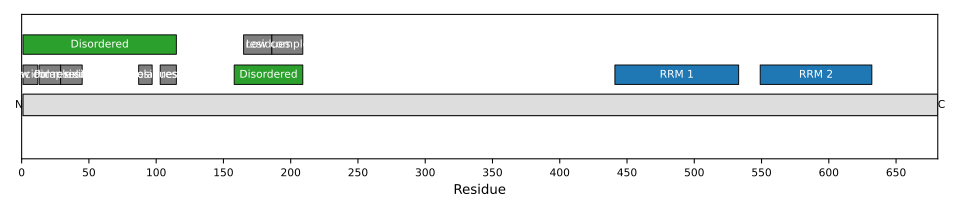
1: Sequence-specific RNA-binding protein which acts as a translational repressor in the basal unstimulated state but, following neuronal stimulation, acts as a translational activator (By similarity). In contrast to CPEB1, does not bind to the cytoplasmic polyadenylation element (CPE), a uridine-rich sequence element within the mRNA 3'-UTR, but binds to a U-rich loop within a stem-loop structure (By similarity). Required for the consolidation and maintenance of hippocampal-based long term memory (By similarity). In the basal state, binds to the mRNA 3'-UTR of the glutamate receptors GRIA2/GLUR2 mRNA and negatively regulates their translation (By similarity). Also represses the translation of DLG4, GRIN1, GRIN2A and GRIN2B (By similarity). When activated, acts as a translational activator of GRIA1 and GRIA2 (By similarity). In the basal state, suppresses SUMO2 translation but activates it following neuronal stimulation (By similarity). Binds to the 3'-UTR of TRPV1 mRNA and represses TRPV1 translation which is required to maintain normal thermoception (By similarity). Binds actin mRNA, leading to actin translational repression in the basal state and to translational activation following neuronal stimulation (By similarity). Negatively regulates target mRNA levels by binding to TOB1 which recruits CNOT7/CAF1 to a ternary complex and this leads to target mRNA deadenylation and decay (PubMed:21336257). In addition to its role in translation, binds to and inhibits the transcriptional activation activity of STAT5B without affecting its dimerization or DNA-binding activity. This, in turn, represses transcription of the STAT5B target gene EGFR which has been shown to play a role in enhancing learning and memory performance (PubMed:20639532). In contrast to CPEB1, CPEB2 and CPEB4, not required for cell cycle progression (PubMed:26398195)