Transient receptor potential cation channel subfamily V member 1 (TrpV1) (Capsaicin receptor) (Osm-9-like TRP channel 1) (OTRPC1) (Vanilloid receptor 1)
1_MKKWS 6_ STDLG 11_ AAADP 16_ LQKDT 21_ CPDPL 26_ DGDPN 31_ SRPPP 36_ AKPQL 41_ STAKS 46_ RTRLF 51_ GKGDS 56_ EEAFP 61_ VDCPH 66_ EEGEL 71_ DSCPT 76_ ITVSP 81_ VITIQ 86_ RPGDG 91_ PTGAR 96_ LLSQD 101_ SVAAS 106_ TEKTL 111_ RLYDR 116_ RSIFE 121_ AVAQN 126_ NCQDL 131_ ESLLL 136_ FLQKS 141_ KKHLT 146_ DNEFK 151_ DPETG 156_ KTCLL 161_ KAMLN 166_ LHDGQ 171_ NTTIP 176_ LLLEI 181_ ARQTD 186_ SLKEL 191_ VNASY 196_ TDSYY 201_ KGQTA 206_ LHIAI 211_ ERRNM 216_ ALVTL 221_ LVENG 226_ ADVQA 231_ AAHGD 236_ FFKKT 241_ KGRPG 246_ FYFGE 251_ LPLSL 256_ AACTN 261_ QLGIV 266_ KFLLQ 271_ NSWQT 276_ ADISA 281_ RDSVG 286_ NTVLH 291_ ALVEV 296_ ADNTA 301_ DNTKF 306_ VTSMY 311_ NEILM 316_ LGAKL 321_ HPTLK 326_ LEELT 331_ NKKGM 336_ TPLAL 341_ AAGTG 346_ KIGVL 351_ AYILQ 356_ REIQE 361_ PECRH 366_ LSRKF 371_ TEWAY 376_ GPVHS 381_ SLYDL 386_ SCIDT 391_ CEKNS 396_ VLEVI 401_ AYSSS 406_ ETPNR 411_ HDMLL 416_ VEPLN 421_ RLLQD 426_ KWDRF 431_ VKRIF 436_ YFNFL 441_ VYCLY 446_ MIIFT 451_ MAAYY 456_ RPVDG 461_ LPPFK 466_ MEKTG 471_ DYFRV 476_ TGEIL 481_ SVLGG 486_ VYFFF 491_ RGIQY 496_ FLQRR 501_ PSMKT 506_ LFVDS 511_ YSEML 516_ FFLQS 521_ LFMLA 526_ TVVLY 531_ FSHLK 536_ EYVAS 541_ MVFSL 546_ ALGWT 551_ NMLYY 556_ TRGFQ 561_ QMGIY 566_ AVMIE 571_ KMILR 576_ DLCRF 581_ MFVYI 586_ VFLFG 591_ FSTAV 596_ VTLIE 601_ DGKND 606_ SLPSE 611_ STSHR 616_ WRGPA 621_ CRPPD 626_ SSYNS 631_ LYSTC 636_ LELFK 641_ FTIGM 646_ GDLEF 651_ TENYD 656_ FKAVF 661_ IILLL 666_ AYVIL 671_ TYILL 676_ LNMLI 681_ ALMGE 686_ TVNKI 691_ AQESK 696_ NIWKL 701_ QRAIT 706_ ILDTE 711_ KSFLK 716_ CMRKA 721_ FRSGK 726_ LLQVG 731_ YTPDG 736_ KDDYR 741_ WCFRV 746_ DEVNW 751_ TTWNT 756_ NVGII 761_ NEDPG 766_ NCEGV 771_ KRTLS 776_ FSLRS 781_ SRVSG 786_ RHWKN 791_ FALVP 796_ LLREA 801_ SARDR 806_ QSAQP 811_ EEVYL 816_ RQFSG 821_ SLKPE 826_ DAEVF 831_KSPAA
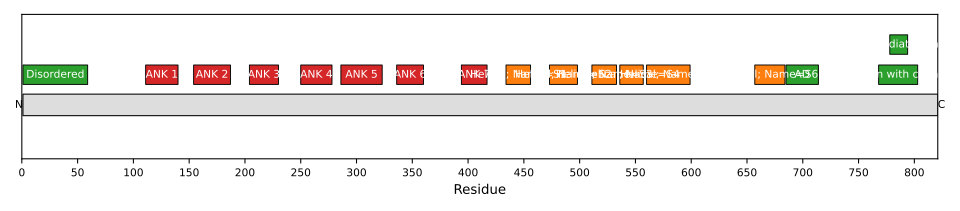
1: Non-selective calcium permeant cation channel involved in detection of noxious chemical and thermal stimuli (PubMed:11050376, PubMed:11243859, PubMed:11226139, PubMed:12077606). Seems to mediate proton influx and may be involved in intracellular acidosis in nociceptive neurons. Involved in mediation of inflammatory pain and hyperalgesia. Sensitized by a phosphatidylinositol second messenger system activated by receptor tyrosine kinases, which involves PKC isozymes and PCL. Activated by vanilloids, like capsaicin, and temperatures higher than 42 degrees Celsius (PubMed:37117175). Upon activation, exhibits a time- and Ca(2+)-dependent outward rectification, followed by a long-lasting refractory state. Mild extracellular acidic pH (6.5) potentiates channel activation by noxious heat and vanilloids, whereas acidic conditions (pH <6) directly activate the channel. Can be activated by endogenous compounds, including 12-hydroperoxytetraenoic acid and bradykinin. Acts as ionotropic endocannabinoid receptor with central neuromodulatory effects. Triggers a form of long-term depression (TRPV1-LTD) mediated by the endocannabinoid anandamine in the hippocampus and nucleus accumbens by affecting AMPA receptors endocytosis