Olfactory receptor 10J5 (Olfactory receptor OR1-28)
1_MKRKN 6_ FTEVS 11_ EFIFL 16_ GFSSF 21_ GKHQI 26_ TLFVV 31_ FLTVY 36_ ILTLV 41_ ANIII 46_ VTIIC 51_ IDHHL 56_ HTPMY 61_ FFLSM 66_ LASSE 71_ TVYTL 76_ VIVPR 81_ MLLSL 86_ IFHNQ 91_ PISLA 96_ GCATQ 101_ MFFFV 106_ ILATN 111_ NCFLL 116_ TAMGY 121_ DRYVA 126_ ICRPL 131_ RYTVI 136_ MSKGL 141_ CAQLV 146_ CGSFG 151_ IGLTM 156_ AVLHV 161_ TAMFN 166_ LPFCG 171_ TVVDH 176_ FFCDI 181_ YPVMK 186_ LSCID 191_ TTINE 196_ IINYG 201_ VSSFV 206_ IFVPI 211_ GLIFI 216_ SYVLV 221_ ISSIL 226_ QIASA 231_ EGRKK 236_ TFATC 241_ VSHLT 246_ VVIVH 251_ CGCAS 256_ IAYLK 261_ PKSES 266_ SIEKD 271_ LVLSV 276_ TYTII 281_ TPLLN 286_ PVVYS 291_ LRNKE 296_ VKDAL 301_CRVVG
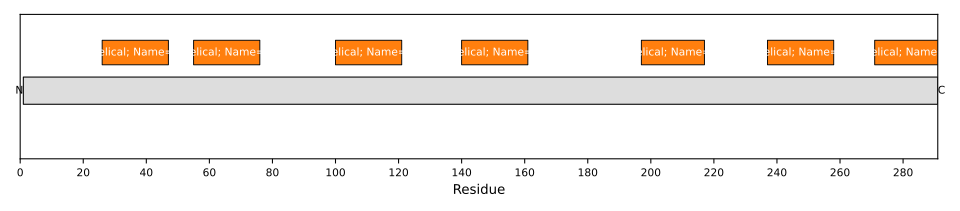
1: Olfactory receptor. Activated by the synthetic floral odorant, lyral, and by alpha-cedrene, a sesquiterpene constituent of cedarwood oil. Its activation increases intracellular Ca(2+) (PubMed:25791473, PubMed:28842679). Acts as a key regulator of myogenesis through its actions on cell migration and adhesion by activating the Ca(2+)-dependent AKT signal transduction pathway (By similarity). Also acts as a regulator of angiogenesis (PubMed:25791473). Moreover, plays a role in the regulation of lipid accumulation in hepatocytes via the cAMP-PKA pathway (PubMed:28842679). May be involved in sperm chemotaxis and motility (By similarity)