Tsukushi (E2-induced gene 4 protein) (Leucine-rich repeat-containing protein 54)
1_MPWPL 6_ LLLLA 11_ VSGAQ 16_ TTRPC 21_ FPGCQ 26_ CEVET 31_ FGLFD 36_ SFSLT 41_ RVDCS 46_ GLGPH 51_ IMPVP 56_ IPLDT 61_ AHLDL 66_ SSNRL 71_ EMVNE 76_ SVLAG 81_ PGYTT 86_ LAGLD 91_ LSHNL 96_ LTSIS 101_ PTAFS 106_ RLRYL 111_ ESLDL 116_ SHNGL 121_ TALPA 126_ ESFTS 131_ SPLSD 136_ VNLSH 141_ NQLRE 146_ VSVSA 151_ FTTHS 156_ QGRAL 161_ HVDLS 166_ HNLIH 171_ RLVPH 176_ PTRAG 181_ LPAPT 186_ IQSLN 191_ LAWNR 196_ LHAVP 201_ NLRDL 206_ PLRYL 211_ SLDGN 216_ PLAVI 221_ GPGAF 226_ AGLGG 231_ LTHLS 236_ LASLQ 241_ RLPEL 246_ APSGF 251_ RELPG 256_ LQVLD 261_ LSGNP 266_ KLNWA 271_ GAEVF 276_ SGLSS 281_ LQELD 286_ LSGTN 291_ LVPLP 296_ EALLL 301_ HLPAL 306_ QSVSV 311_ GQDVR 316_ CRRLV 321_ REGTY 326_ PRRPG 331_ SSPKV 336_ ALHCV 341_ DTRDS 346_AARGP
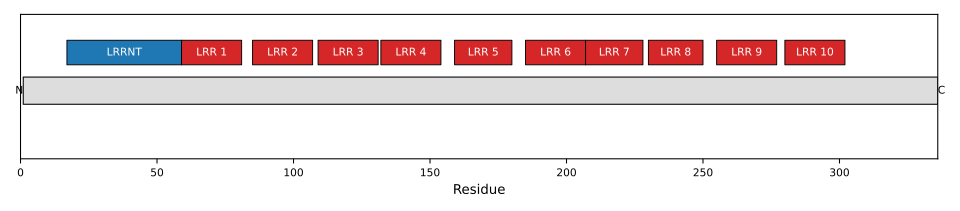
1: Contributes to various developmental events and other processes such as wound healing and cholesterol homeostasis through its interactions with multiple signaling pathways. Wnt signaling inhibitor which competes with WNT2B for binding to Wnt receptor FZD4 and represses WNT2B-dependent development of the peripheral eye. Plays a role in regulating the hair cycle by controlling TGFB1 signaling. Required for the development of the anterior commissure in the brain by inhibiting neurite outgrowth. Essential for terminal differentiation of hippocampal neural stem cells. Plays a role in regulating bone elongation and bone mass by modulating growth plate chondrocyte function and overall body size. Required for development of the inner ear through its involvement in stereocilia formation in inner hair cells. Facilitates wound healing by inhibiting secretion of TGFB1 from macrophages which prevents myofibroblast differentiation, maintaining inflammatory cell quiescence. Plays a role in cholesterol homeostasis by reducing circulating high-density lipoprotein cholesterol, lowering cholesterol efflux capacity and decreasing cholesterol-to-bile acid conversion in the liver. In one study, shown to negatively regulate sympathetic innervation in brown fat, leading to reduced energy expenditure. In another study, shown not to affect brown fat thermogenic capacity, body weight gain or glucose homeostasis