DNA topoisomerase 2-binding protein 1 (DNA topoisomerase II-beta-binding protein 1) (TopBP1) (DNA topoisomerase II-binding protein 1)
1_MSRND 6_ KEPFF 11_ VKFLK 16_ SSDNS 21_ KCFFK 26_ ALESI 31_ KEFQS 36_ EEYLQ 41_ IITEE 46_ EALKI 51_ KENDR 56_ SLYIC 61_ DPFSG 66_ VVFDH 71_ LKKLG 76_ CRIVG 81_ PQVVI 86_ FCMHH 91_ QRCVP 96_ RAEHP 101_ VYNMV 106_ MSDVT 111_ ISCTS 116_ LEKEK 121_ REEVH 126_ KYVQM 131_ MGGRV 136_ YRDLN 141_ VSVTH 146_ LIAGE 151_ VGSKK 156_ YLVAA 161_ NLKKP 166_ ILLPS 171_ WIKTL 176_ WEKSQ 181_ EKKIT 186_ RYTDI 191_ NMEDF 196_ KCPIF 201_ LGCII 206_ CVTGL 211_ CGLDR 216_ KEVQQ 221_ LTVKH 226_ GGQYM 231_ GQLKM 236_ NECTH 241_ LIVQE 246_ PKGQK 251_ YECAK 256_ RWNVH 261_ CVTTQ 266_ WFFDS 271_ IEKGF 276_ CQDES 281_ IYKTE 286_ PRPEA 291_ KTMPN 296_ SSTPT 301_ SQINT 306_ IDSRT 311_ LSDVS 316_ NISNI 321_ NASCV 326_ SESIC 331_ NSLNS 336_ KLEPT 341_ LENLE 346_ NLDVS 351_ AFQAP 356_ EDLLD 361_ GCRIY 366_ LCGFS 371_ GRKLD 376_ KLRRL 381_ INSGG 386_ GVRFN 391_ QLNED 396_ VTHVI 401_ VGDYD 406_ DELKQ 411_ FWNKS 416_ AHRPH 421_ VVGAK 426_ WLLEC 431_ FSKGY 436_ MLSEE 441_ PYIHA 446_ NYQPV 451_ EIPVS 456_ HKPES 461_ KAALL 466_ KKKNS 471_ SFSKK 476_ DFAPS 481_ EKHEQ 486_ ADEDL 491_ LSQYE 496_ NGSST 501_ VVEAK 506_ TSEAR 511_ PFNDS 516_ THAEP 521_ LNDST 526_ HISLQ 531_ EENQS 536_ SVSHC 541_ VPDVS 546_ TITEE 551_ GLFSQ 556_ KSFLV 561_ LGFSN 566_ ENESN 571_ IANII 576_ KENAG 581_ KIMSL 586_ LSRTV 591_ ADYAV 596_ VPLLG 601_ CEVEA 606_ TVGEV 611_ VTNTW 616_ LVTCI 621_ DYQTL 626_ FDPKS 631_ NPLFT 636_ PVPVM 641_ TGMTP 646_ LEDCV 651_ ISFSQ 656_ CAGAE 661_ KESLT 666_ FLANL 671_ LGASV 676_ QEYFV 681_ RKSNA 686_ KKGMF 691_ ASTHL 696_ ILKER 701_ GGSKY 706_ EAAKK 711_ WNLPA 716_ VTIAW 721_ LLETA 726_ RTGKR 731_ ADESH 736_ FLIEN 741_ STKEE 746_ RSLET 751_ EITNG 756_ INLNS 761_ DTAEH 766_ PGTRL 771_ QTHRK 776_ TVVTP 781_ LDMNR 786_ FQSKA 791_ FRAVV 796_ SQHAR 801_ QVAAS 806_ PAVGQ 811_ PLQKE 816_ PSLHL 821_ DTPSK 826_ FLSKD 831_ KLFKP 836_ SFDVK 841_ DALAA 846_ LETPG 851_ RPSQQ 856_ KRKPS 861_ TPLSE 866_ VIVKN 871_ LQLAL 876_ ANSSR 881_ NAVAL 886_ SASPQ 891_ LKEAQ 896_ SEKEE 901_ APKPL 906_ HKVVV 911_ CVSKK 916_ LSKKQ 921_ SELNG 926_ IAASL 931_ GADYR 936_ WSFDE 941_ TVTHF 946_ IYQGR 951_ PNDTN 956_ REYKS 961_ VKERG 966_ VHIVS 971_ EHWLL 976_ DCAQE 981_ CKHLP 986_ ESLYP 991_ HTYNP 996_ KMSLD 1001_ ISAVQ 1006_ DGRLC 1011_ NSRLL 1016_ SAVSS 1021_ TKDDE 1026_ PDPLI 1031_ LEEND 1036_ VDNMA 1041_ TNNKE 1046_ SAPSN 1051_ GSGKN 1056_ DSKGV 1061_ LTQTL 1066_ EMREN 1071_ FQKQL 1076_ QEIMS 1081_ ATSIV 1086_ KPQGQ 1091_ RTSLS 1096_ RSGCN 1101_ SASST 1106_ PDSTR 1111_ SARSG 1116_ RSRVL 1121_ EALRQ 1126_ SRQTV 1131_ PDVNT 1136_ EPSQN 1141_ EQIIW 1146_ DDPTA 1151_ REERA 1156_ RLASN 1161_ LQWPS 1166_ CPTQY 1171_ SELQV 1176_ DIQNL 1181_ EDSPF 1186_ QKPLH 1191_ DSEIA 1196_ KQAVC 1201_ DPGNI 1206_ RVTEA 1211_ PKHPI 1216_ SEELE 1221_ TPIKD 1226_ SHLIP 1231_ TPQAP 1236_ SIAFP 1241_ LANPP 1246_ VAPHP 1251_ REKII 1256_ TIEET 1261_ HEELK 1266_ KQYIF 1271_ QLSSL 1276_ NPQER 1281_ IDYCH 1286_ LIEKL 1291_ GGLVI 1296_ EKQCF 1301_ DPTCT 1306_ HIVVG 1311_ HPLRN 1316_ EKYLA 1321_ SVAAG 1326_ KWVLH 1331_ RSYLE 1336_ ACRTA 1341_ GHFVQ 1346_ EEDYE 1351_ WGSSS 1356_ ILDVL 1361_ TGINV 1366_ QQRRL 1371_ ALAAM 1376_ RWRKK 1381_ IQQRQ 1386_ ESGIV 1391_ EGAFS 1396_ GWKVI 1401_ LHVDQ 1406_ SREAG 1411_ FKRLL 1416_ QSGGA 1421_ KVLPG 1426_ HSVPL 1431_ FKEAT 1436_ HLFSD 1441_ LNKLK 1446_ PDDSG 1451_ VNIAE 1456_ AAAQN 1461_ VYCLR 1466_ TEYIA 1471_ DYLMQ 1476_ ESPPH 1481_ VENYC 1486_ LPEAI 1491_ SFIQN 1496_ NKELG 1501_ TGLSQ 1506_ KRKAP 1511_ TEKNK 1516_IKRPR
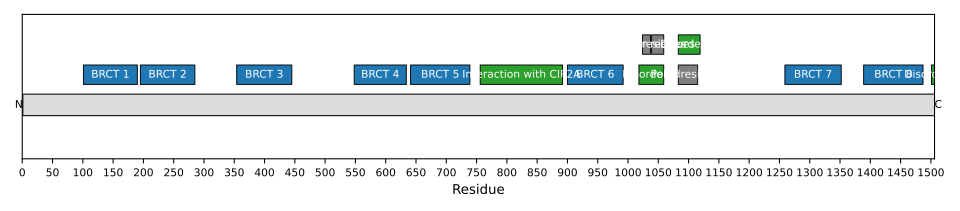
1: Scaffold protein that acts as a key protein-protein adapter in DNA replication and DNA repair (PubMed:10498869, PubMed:11395493, PubMed:11714696, PubMed:17575048, PubMed:20545769, PubMed:21777809, PubMed:26811421, PubMed:30898438, PubMed:31135337, PubMed:33592542, PubMed:35597237, PubMed:37674080). Composed of multiple BRCT domains, which specifically recognize and bind phosphorylated proteins, bringing proteins together into functional combinations (PubMed:17575048, PubMed:20545769, PubMed:21777809, PubMed:26811421, PubMed:30898438, PubMed:31135337, PubMed:35597237, PubMed:37674080). Required for DNA replication initiation but not for the formation of pre-replicative complexes or the elongation stages (By similarity). Necessary for the loading of replication factors onto chromatin, including GMNC, CDC45, DNA polymerases and components of the GINS complex (By similarity). Plays a central role in DNA repair by bridging proteins and promoting recruitment of proteins to DNA damage sites (PubMed:30898438, PubMed:35597237, PubMed:37674080). Involved in double-strand break (DSB) repair via homologous recombination in S-phase by promoting the exchange between the DNA replication factor A (RPA) complex and RAD51 (PubMed:26811421, PubMed:35597237). Mechanistically, TOPBP1 is recruited to DNA damage sites in S-phase via interaction with phosphorylated HTATSF1, and promotes the loading of RAD51, thereby facilitating RAD51 nucleofilaments formation and RPA displacement, followed by homologous recombination (PubMed:35597237). Involved in microhomology-mediated end-joining (MMEJ) DNA repair by promoting recruitment of polymerase theta (POLQ) to DNA damage sites during mitosis (PubMed:37674080). MMEJ is an alternative non-homologous end-joining (NHEJ) machinery that takes place during mitosis to repair DSBs in DNA that originate in S-phase (PubMed:37674080). Recognizes and binds POLQ phosphorylated by PLK1, enabling its recruitment to DSBs for subsequent repair (PubMed:37674080). Involved in G1 DNA damage checkpoint by acting as a molecular adapter that couples TP53BP1 and the 9-1-1 complex (PubMed:31135337). In response to DNA damage, triggers the recruitment of checkpoint signaling proteins on chromatin, which activate the CHEK1 signaling pathway and block S-phase progression (PubMed:16530042, PubMed:21777809). Acts as an activator of the kinase activity of ATR (PubMed:16530042, PubMed:21777809). Also required for chromosomal stability when DSBs occur during mitosis by forming filamentous assemblies that bridge MDC1 and tether broken chromosomes during mitosis (PubMed:30898438). Together with CIP2A, plays an essential role in the response to genome instability generated by the presence of acentric chromosome fragments derived from shattered chromosomes within micronuclei (PubMed:35121901, PubMed:35842428, PubMed:37165191, PubMed:37316668). Micronuclei, which are frequently found in cancer cells, consist of chromatin surrounded by their own nuclear membrane: following breakdown of the micronuclear envelope, a process associated with chromothripsis, the CIP2A-TOPBP1 complex tethers chromosome fragments during mitosis to ensure clustered segregation of the fragments to a single daughter cell nucleus, facilitating re-ligation with limited chromosome scattering and loss (PubMed:37165191, PubMed:37316668). Recruits the SWI/SNF chromatin remodeling complex to E2F1-responsive promoters, thereby down-regulating E2F1 activity and inhibiting E2F1-dependent apoptosis during G1/S transition and after DNA damage (PubMed:12697828, PubMed:15075294)