Rho GTPase-activating protein 45 [Cleaved into: Minor histocompatibility antigen HA-1 (mHag HA-1)]
1_MFSRK 6_ KRELM 11_ KTPSI 16_ SKKNR 21_ AGSPS 26_ PQPSG 31_ ELPRK 36_ DGADA 41_ VFPGP 46_ SLEPP 51_ AGSSG 56_ VKATG 61_ TLKRP 66_ TSLSR 71_ HASAA 76_ GFPLS 81_ GAASW 86_ TLGRS 91_ HRSPL 96_ TAASP 101_ GELPT 106_ EGAGP 111_ DVVED 116_ ISHLL 121_ ADVAR 126_ FAEGL 131_ EKLKE 136_ CVLRD 141_ DLLEA 146_ RRPRA 151_ HECLG 156_ EALRV 161_ MHQII 166_ SKYPL 171_ LNTVE 176_ TLTAA 181_ GTLIA 186_ KVKAF 191_ HYESN 196_ NDLEK 201_ QEFEK 206_ ALETI 211_ AVAFS 216_ STVSE 221_ FLMGE 226_ VDSST 231_ LLAVP 236_ PGDSS 241_ QSMES 246_ LYGPG 251_ SEGTP 256_ PSLED 261_ CDAGC 266_ LPAEE 271_ VDVLL 276_ QRCEG 281_ GVDAA 286_ LLYAK 291_ NMAKY 296_ MKDLI 301_ SYLEK 306_ RTTLE 311_ MEFAK 316_ GLQKI 321_ AHNCR 326_ QSVMQ 331_ EPHMP 336_ LLSIY 341_ SLALE 346_ QDLEF 351_ GHSMV 356_ QAVGT 361_ LQTQT 366_ FMQPL 371_ TLRRL 376_ EHEKR 381_ RKEIK 386_ EAWHR 391_ AQRKL 396_ QEAES 401_ NLRKA 406_ KQGYV 411_ QRCED 416_ HDKAR 421_ FLVAK 426_ AEEEQ 431_ AGSAP 436_ GAGST 441_ ATKTL 446_ DKRRR 451_ LEEEA 456_ KNKAE 461_ EAMAT 466_ YRTCV 471_ ADAKT 476_ QKQEL 481_ EDTKV 486_ TALRQ 491_ IQEVI 496_ RQSDQ 501_ TIKSA 506_ TISYY 511_ QMMHM 516_ QTAPL 521_ PVHFQ 526_ MLCES 531_ SKLYD 536_ PGQQY 541_ ASHVR 546_ QLQRD 551_ QEPDV 556_ HYDFE 561_ PHVSA 566_ NAWSP 571_ VMRAR 576_ KSSFN 581_ VSDVA 586_ RPEAA 591_ GSPPE 596_ EGGCT 601_ EGTPA 606_ KDHRA 611_ GRGHQ 616_ VHKSW 621_ PLSIS 626_ DSDSG 631_ LDPGP 636_ GAGDF 641_ KKFER 646_ TSSSG 651_ TMSST 656_ EELVD 661_ PDGGA 666_ GASAF 671_ EQADL 676_ NGMTP 681_ ELPVA 686_ VPSGP 691_ FRHEG 696_ LSKAA 701_ RTHRL 706_ RKLRT 711_ PAKCR 716_ ECNSY 721_ VYFQG 726_ AECEE 731_ CCLAC 736_ HKKCL 741_ ETLAI 746_ QCGHK 751_ KLQGR 756_ LQLFG 761_ QDFSH 766_ AARSA 771_ PDGVP 776_ FIVKK 781_ CVCEI 786_ ERRAL 791_ RTKGI 796_ YRVNG 801_ VKTRV 806_ EKLCQ 811_ AFENG 816_ KELVE 821_ LSQAS 826_ PHDIS 831_ NVLKL 836_ YLRQL 841_ PEPLI 846_ SFRLY 851_ HELVG 856_ LAKDS 861_ LKAEA 866_ EAKAA 871_ SRGRQ 876_ DGSES 881_ EAVAV 886_ ALAGR 891_ LRELL 896_ RDLPP 901_ ENRAS 906_ LQYLL 911_ RHLRR 916_ IVEVE 921_ QDNKM 926_ TPGNL 931_ GIVFG 936_ PTLLR 941_ PRPTE 946_ ATVSL 951_ SSLVD 956_ YPHQA 961_ RVIET 966_ LIVHY 971_ GLVFE 976_ EEPEE 981_ TPGGQ 986_ DESSN 991_ QRAEV 996_ VVQVP 1001_ YLEAG 1006_ EAVVY 1011_ PLQEA 1016_ AADGC 1021_ RESRV 1026_ VSNDS 1031_ DSDLE 1036_ EASEL 1041_ LSSSE 1046_ ASALG 1051_ HLSFL 1056_ EQQQS 1061_ EASLE 1066_ VASGS 1071_ HSGSE 1076_ EQLEA 1081_ TARED 1086_ GDGDE 1091_ DGPAQ 1096_ QLSGF 1101_ NTNQS 1106_ NNVLQ 1111_ APLPP 1116_ MRLRG 1121_ GRMTL 1126_ GSCRE 1131_RQPEF
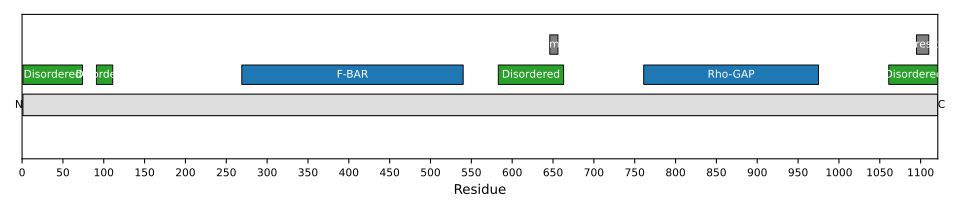
1: Contains a GTPase activator for the Rho-type GTPases (RhoGAP) domain that would be able to negatively regulate the actin cytoskeleton as well as cell spreading. However, also contains N-terminally a BAR-domin which is able to play an autoinhibitory effect on this RhoGAP activity
2: Precursor of the histocompatibility antigen HA-1. More generally, minor histocompatibility antigens (mHags) refer to immunogenic peptide which, when complexed with MHC, can generate an immune response after recognition by specific T-cells. The peptides are derived from polymorphic intracellular proteins, which are cleaved by normal pathways of antigen processing. The binding of these peptides to MHC class I or class II molecules and its expression on the cell surface can stimulate T-cell responses and thereby trigger graft rejection or graft-versus-host disease (GVHD) after hematopoietic stem cell transplantation from HLA-identical sibling donor. GVHD is a frequent complication after bone marrow transplantation (BMT), due to mismatch of minor histocompatibility antigen in HLA-matched sibling marrow transplants. Specifically, mismatching for mHag HA-1 which is recognized as immunodominant, is shown to be associated with the development of severe GVHD after HLA-identical BMT. HA-1 is presented to the cell surface by MHC class I HLA-A*0201, but also by other HLA-A alleles. This complex specifically elicits donor-cytotoxic T-lymphocyte (CTL) reactivity against hematologic malignancies after treatment by HLA-identical allogenic BMT. It induces cell recognition and lysis by CTL