Serine protease HTRA1 (EC 3.4.21.-) (High-temperature requirement A serine peptidase 1) (L56) (Serine protease 11)
1_MQIPR 6_ AALLP 11_ LLLLL 16_ LAAPA 21_ SAQLS 26_ RAGRS 31_ APLAA 36_ GCPDR 41_ CEPAR 46_ CPPQP 51_ EHCEG 56_ GRARD 61_ ACGCC 66_ EVCGA 71_ PEGAA 76_ CGLQE 81_ GPCGE 86_ GLQCV 91_ VPFGV 96_ PASAT 101_ VRRRA 106_ QAGLC 111_ VCASS 116_ EPVCG 121_ SDANT 126_ YANLC 131_ QLRAA 136_ SRRSE 141_ RLHRP 146_ PVIVL 151_ QRGAC 156_ GQGQE 161_ DPNSL 166_ RHKYN 171_ FIADV 176_ VEKIA 181_ PAVVH 186_ IELFR 191_ KLPFS 196_ KREVP 201_ VASGS 206_ GFIVS 211_ EDGLI 216_ VTNAH 221_ VVTNK 226_ HRVKV 231_ ELKNG 236_ ATYEA 241_ KIKDV 246_ DEKAD 251_ IALIK 256_ IDHQG 261_ KLPVL 266_ LLGRS 271_ SELRP 276_ GEFVV 281_ AIGSP 286_ FSLQN 291_ TVTTG 296_ IVSTT 301_ QRGGK 306_ ELGLR 311_ NSDMD 316_ YIQTD 321_ AIINY 326_ GNSGG 331_ PLVNL 336_ DGEVI 341_ GINTL 346_ KVTAG 351_ ISFAI 356_ PSDKI 361_ KKFLT 366_ ESHDR 371_ QAKGK 376_ AITKK 381_ KYIGI 386_ RMMSL 391_ TSSKA 396_ KELKD 401_ RHRDF 406_ PDVIS 411_ GAYII 416_ EVIPD 421_ TPAEA 426_ GGLKE 431_ NDVII 436_ SINGQ 441_ SVVSA 446_ NDVSD 451_ VIKRE 456_ STLNM 461_ VVRRG 466_ NEDIM 471_ITVIP
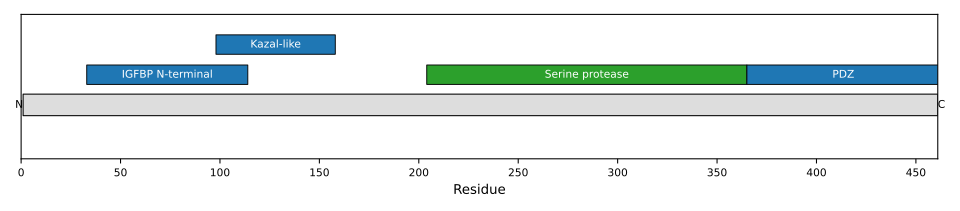
1: Serine protease with a variety of targets, including extracellular matrix proteins such as fibronectin. HTRA1-generated fibronectin fragments further induce synovial cells to up-regulate MMP1 and MMP3 production. May also degrade proteoglycans, such as aggrecan, decorin and fibromodulin. Through cleavage of proteoglycans, may release soluble FGF-glycosaminoglycan complexes that promote the range and intensity of FGF signals in the extracellular space. Regulates the availability of insulin-like growth factors (IGFs) by cleaving IGF-binding proteins. Inhibits signaling mediated by TGF-beta family members. This activity requires the integrity of the catalytic site, although it is unclear whether TGF-beta proteins are themselves degraded. By acting on TGF-beta signaling, may regulate many physiological processes, including retinal angiogenesis and neuronal survival and maturation during development. Intracellularly, degrades TSC2, leading to the activation of TSC2 downstream targets