Ninjurin-1 (Nerve injury-induced protein 1) [Cleaved into: Secreted ninjurin-1 (Soluble ninjurin-1)]
1_MDSGT 6_ EEYEL 11_ NGGLP 16_ PGTPG 21_ SPDAS 26_ PARWG 31_ WRHGP 36_ INVNH 41_ YASKK 46_ SAAES 51_ MLDIA 56_ LLMAN 61_ ASQLK 66_ AVVEQ 71_ GPSFA 76_ FYVPL 81_ VVLIS 86_ ISLVL 91_ QIGVG 96_ VLLIF 101_ LVKYD 106_ LNNPA 111_ KHAKL 116_ DFLNN 121_ LATGL 126_ VFIIV 131_ VVNIF 136_ ITAFG 141_ VQKPL 146_MDMAP
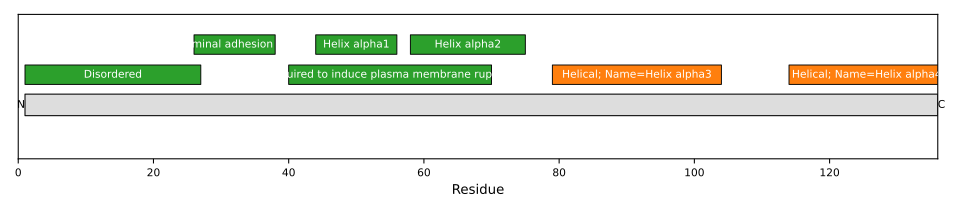
1: Effector of various programmed cell death, such as pyroptosis and necroptosis, which mediates plasma membrane rupture (cytolysis) (PubMed:33472215, PubMed:36468682, PubMed:37196676, PubMed:37198476, PubMed:38614101, PubMed:39667936). Oligomerizes in response to death stimuli and forms ring-like structures on the plasma membrane: acts by cutting and shedding membrane disks, like a cookie cutter, leading to membrane damage and loss that cannot be repaired by the cell (PubMed:38614101). Plasma membrane rupture leads to release intracellular molecules named damage-associated molecular patterns (DAMPs) that propagate the inflammatory response (PubMed:33472215, PubMed:36468682, PubMed:37196676, PubMed:37198476). Mechanistically, mediates plasma membrane rupture by introducing hydrophilic faces of 2 alpha helices into the hydrophobic membrane (PubMed:37198476, PubMed:38614101). Induces plasma membrane rupture downstream of Gasdermin (GSDMA, GSDMB, GSDMC, GSDMD, or GSDME) or MLKL during pyroptosis or necroptosis, respectively (PubMed:33472215, PubMed:36468682, PubMed:37196676, PubMed:37198476). Acts as an effector of PANoptosis downstream of CASP1, CASP4, CASP8 and RIPK3 (By similarity). Also induces plasma membrane rupture in response to cell swelling caused by osmotic stress and ferroptosis downstream of lipid peroxidation (By similarity). Acts as a regulator of Toll-like receptor 4 (TLR4) signaling triggered by lipopolysaccharide (LPS) during systemic inflammation; directly binds LPS (PubMed:26677008). Involved in leukocyte migration during inflammation by promoting transendothelial migration of macrophages via homotypic binding (By similarity). Promotes the migration of monocytes across the brain endothelium to central nervous system inflammatory lesions (PubMed:22162058). Also acts as a homophilic transmembrane adhesion molecule involved in various processes such as axonal growth, cell chemotaxis and angiogenesis (PubMed:33028854, PubMed:8780658, PubMed:9261151). Promotes cell adhesion by mediating homophilic interactions via its extracellular N-terminal adhesion motif (N-NAM) (PubMed:33028854, PubMed:8780658, PubMed:9261151). Involved in the progression of the inflammatory stress by promoting cell-to-cell interactions between immune cells and endothelial cells (PubMed:22162058, PubMed:26677008, PubMed:32147432). Plays a role in nerve regeneration by promoting maturation of Schwann cells (PubMed:8780658, PubMed:9261151). Acts as a regulator of angiogenesis (PubMed:33028854). Promotes the formation of new vessels by mediating the interaction between capillary pericyte cells and endothelial cells (By similarity). Promotes osteoclasts development by enhancing the survival of prefusion osteoclasts (By similarity). Also involved in striated muscle growth and differentiation (By similarity)
2: Secreted form generated by cleavage, which has chemotactic activity (By similarity). Acts as an anti-inflammatory mediator by promoting monocyte recruitment, thereby ameliorating atherosclerosis (PubMed:32883094)