Mas-related G-protein coupled receptor member X2
1_MDPTT 6_ PAWGT 11_ ESTTV 16_ NGNDQ 21_ ALLLL 26_ CGKET 31_ LIPVF 36_ LILFI 41_ ALVGL 46_ VGNGF 51_ VLWLL 56_ GFRMR 61_ RNAFS 66_ VYVLS 71_ LAGAD 76_ FLFLC 81_ FQIIN 86_ CLVYL 91_ SNFFC 96_ SISIN 101_ FPSFF 106_ TTVMT 111_ CAYLA 116_ GLSML 121_ STVST 126_ ERCLS 131_ VLWPI 136_ WYRCR 141_ RPRHL 146_ SAVVC 151_ VLLWA 156_ LSLLL 161_ SILEG 166_ KFCGF 171_ LFSDG 176_ DSGWC 181_ QTFDF 186_ ITAAW 191_ LIFLF 196_ MVLCG 201_ SSLAL 206_ LVRIL 211_ CGSRG 216_ LPLTR 221_ LYLTI 226_ LLTVL 231_ VFLLC 236_ GLPFG 241_ IQWFL 246_ ILWIW 251_ KDSDV 256_ LFCHI 261_ HPVSV 266_ VLSSL 271_ NSSAN 276_ PIIYF 281_ FVGSF 286_ RKQWR 291_ LQQPI 296_ LKLAL 301_ QRALQ 306_ DIAEV 311_ DHSEG 316_ CFRQG 321_TPEMS
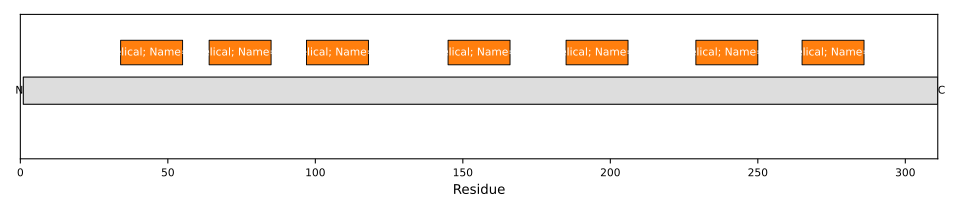
1: Mast cell-specific receptor for basic secretagogues, i.e. cationic amphiphilic drugs, as well as endo- or exogenous peptides, consisting of a basic head group and a hydrophobic core (PubMed:25517090). Recognizes and binds small molecules containing a cyclized tetrahydroisoquinoline (THIQ), such as non-steroidal neuromuscular blocking drugs (NMBDs), including tubocurarine and atracurium. In response to these compounds, mediates pseudo-allergic reactions characterized by histamine release, inflammation and airway contraction (By similarity). Acts as a receptor for a number of other ligands, including peptides and alkaloids, such as cortistatin-14, proadrenomedullin N-terminal peptides PAMP-12 and, at lower extent, PAMP-20, antibacterial protein LL-37, PMX-53 peptide, beta-defensins, and complanadine A