Mas-related G-protein coupled receptor member X1 (Sensory neuron-specific G-protein coupled receptor 3/4)
1_MDPTI 6_ STLDT 11_ ELTPI 16_ NGTEE 21_ TLCYK 26_ QTLSL 31_ TVLTC 36_ IVSLV 41_ GLTGN 46_ AVVLW 51_ LLGCR 56_ MRRNA 61_ FSIYI 66_ LNLAA 71_ ADFLF 76_ LSGRL 81_ IYSLL 86_ SFISI 91_ PHTIS 96_ KILYP 101_ VMMFS 106_ YFAGL 111_ SFLSA 116_ VSTER 121_ CLSVL 126_ WPIWY 131_ RCHRP 136_ THLSA 141_ VVCVL 146_ LWALS 151_ LLRSI 156_ LEWML 161_ CGFLF 166_ SGADS 171_ AWCQT 176_ SDFIT 181_ VAWLI 186_ FLCVV 191_ LCGSS 196_ LVLLI 201_ RILCG 206_ SRKIP 211_ LTRLY 216_ VTILL 221_ TVLVF 226_ LLCGL 231_ PFGIQ 236_ FFLFL 241_ WIHVD 246_ REVLF 251_ CHVHL 256_ VSIFL 261_ SALNS 266_ SANPI 271_ IYFFV 276_ GSFRQ 281_ RQNRQ 286_ NLKLV 291_ LQRAL 296_ QDASE 301_ VDEGG 306_ GQLPE 311_ EILEL 316_SGSRL
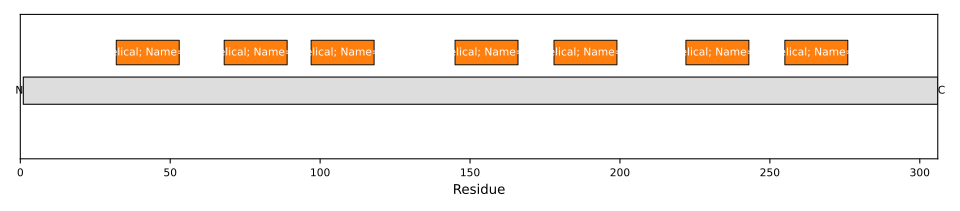
1: Orphan receptor. Probably involved in the function of nociceptive neurons. May regulate nociceptor function and/or development, including the sensation or modulation of pain. Potently activated by enkephalins including BAM22 (bovine adrenal medulla peptide 22) and BAM (8-22) (PubMed:26582731). BAM22 is the most potent compound and evoked a large and dose-dependent release of intracellular calcium in stably transfected cells. G(alpha)q proteins are involved in the calcium-signaling pathway. Activated by the antimalarial drug, chloroquine. May mediate chloroquine-induced itch, in a histamine-independent manner