Kelch-like protein 15
1_MAGDV 6_ EGFCS 11_ SIHDT 16_ SVSAG 21_ FRALY 26_ EEGLL 31_ LDVTL 36_ VIEDH 41_ QFQAH 46_ KALLA 51_ TQSDY 56_ FRIMF 61_ TADMR 66_ ERDQD 71_ KIHLK 76_ GLTAT 81_ GFSHV 86_ LQFMY 91_ YGTIE 96_ LSMNT 101_ VHEIL 106_ QAAMY 111_ VQLIE 116_ VVKFC 121_ CSFLL 126_ AKICL 131_ ENCAE 136_ IMRLL 141_ DDFGV 146_ NIEGV 151_ REKLD 156_ TFLLD 161_ NFVPL 166_ MSRPD 171_ FLSYL 176_ SFEKL 181_ MSYLD 186_ NDHLS 191_ RFPEI 196_ ELYEA 201_ VQSWL 206_ RHDRR 211_ RWRHT 216_ DTIIQ 221_ NIRFC 226_ LMTPT 231_ SVFEK 236_ VKTSE 241_ FYRYS 246_ RQLRY 251_ EVDQA 256_ LNYFQ 261_ NVHQQ 266_ PLLDM 271_ KSSRI 276_ RSAKP 281_ QTTVF 286_ RGMIG 291_ HSMVN 296_ SKILL 301_ LKKPR 306_ VWWEL 311_ EGPQV 316_ PLRPD 321_ CLAIV 326_ NNFVF 331_ LLGGE 336_ ELGPD 341_ GEFHA 346_ SSKVF 351_ RYDPR 356_ QNSWL 361_ QMADM 366_ SVPRS 371_ EFAVG 376_ VIGKF 381_ IYAVA 386_ GRTRD 391_ ETFYS 396_ TERYD 401_ ITNDK 406_ WEFVD 411_ PYPVN 416_ KYGHE 421_ GTVLN 426_ NKLFI 431_ TGGIT 436_ SSSTS 441_ KQVCV 446_ FDPSK 451_ EGTIE 456_ QRTRR 461_ TQVVT 466_ NCWEN 471_ KSKMN 476_ YARCF 481_ HKMIS 486_ YNGKL 491_ YVFGG 496_ VCVIL 501_ RASFE 506_ SQGCP 511_ STEVY 516_ NPETD 521_ QWTIL 526_ ASMPI 531_ GRSGH 536_ GVTVL 541_ DKQIM 546_ VLGGL 551_ CYNGH 556_ YSDSI 561_ LTFDP 566_ DENKW 571_ KEDEY 576_ PRMPC 581_ KLDGL 586_ QVCNL 591_ HFPDY 596_VLDEV
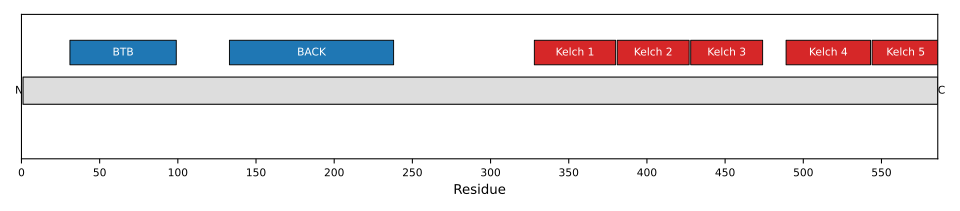
1: Substrate-specific adapter for CUL3 E3 ubiquitin-protein ligase complex (PubMed:14528312, PubMed:27561354, PubMed:35219381). Acts as an adapter for CUL3 to target the serine/threonine-protein phosphatase 2A (PP2A) subunit PPP2R5B for ubiquitination and subsequent proteasomal degradation, thus promoting exchange with other regulatory subunits (PubMed:23135275). Acts as an adapter for CUL3 to target the DNA-end resection factor RBBP8/CtIP for ubiquitination and subsequent proteasomal degradation (PubMed:27561354, PubMed:35219381). Through the regulation of RBBP8/CtIP protein turnover, plays a key role in DNA damage response, favoring DNA double-strand repair through error-prone non-homologous end joining (NHEJ) over error-free, RBBP8-mediated homologous recombination (HR) (PubMed:27561354, PubMed:35219381)