Aquaporin-10 (AQP-10) (Aquaglyceroporin-10) (Small intestine aquaporin)
1_MVFTQ 6_ APAEI 11_ MGHLR 16_ IRSLL 21_ ARQCL 26_ AEFLG 31_ VFVLM 36_ LLTQG 41_ AVAQA 46_ VTSGE 51_ TKGNF 56_ FTMFL 61_ AGSLA 66_ VTIAI 71_ YVGGN 76_ VSGAH 81_ LNPAF 86_ SLAMC 91_ IVGRL 96_ PWVKL 101_ PIYIL 106_ VQLLS 111_ AFCAS 116_ GATYV 121_ LYHDA 126_ LQNYT 131_ GGNLT 136_ VTGPK 141_ ETASI 146_ FATYP 151_ APYLS 156_ LNNGF 161_ LDQVL 166_ GTGML 171_ IVGLL 176_ AILDR 181_ RNKGV 186_ PAGLE 191_ PVVVG 196_ MLILA 201_ LGLSM 206_ GANCG 211_ IPLNP 216_ ARDLG 221_ PRLFT 226_ YVAGW 231_ GPEVF 236_ SAGNG 241_ WWWVP 246_ VVAPL 251_ VGATV 256_ GTATY 261_ QLLVA 266_ LHHPE 271_ GPEPA 276_ QDLVS 281_ AQHKA 286_ SELET 291_ PASAQ 296_MLECK
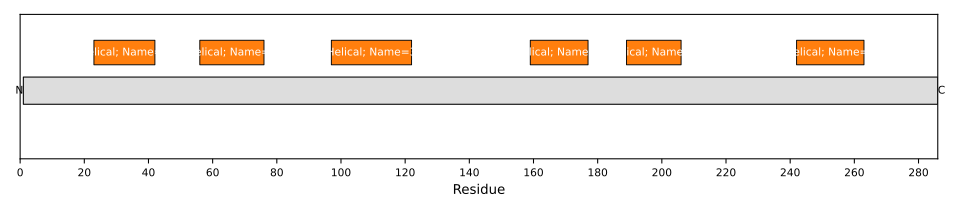
1: Aquaglyceroporins form homotetrameric transmembrane channels, with each monomer independently mediating glycerol and water transport across the plasma membrane along their osmotic gradient (PubMed:11573934, PubMed:12084581, PubMed:21733844, PubMed:23382902, PubMed:30420639). Could also be permeable to urea (PubMed:12084581). Among aquaglyceroporins, it exhibits a unique pH-gated glycerol transport activity, being more active at acidic pH. It most likely plays a central role in the efflux of glycerol formed during triglyceride hydrolysis in adipocytes and in glycerol uptake by enterocytes, as both processes occur and are stimulated at acidic pH (PubMed:11573934, PubMed:23382902, PubMed:30420639)