T cell receptor gamma variable 9
1_MLSLL 6_ HTSTL 11_ AVLGA 16_ LCVYG 21_ AGHLE 26_ QPQIS 31_ STKTL 36_ SKTAR 41_ LECVV 46_ SGITI 51_ SATSV 56_ YWYRE 61_ RPGEV 66_ IQFLV 71_ SISYD 76_ GTVRK 81_ ESGIP 86_ SGKFE 91_ VDRIP 96_ ETSTS 101_ TLTIH 106_ NVEKQ 111_ DIATY 116_YCALW
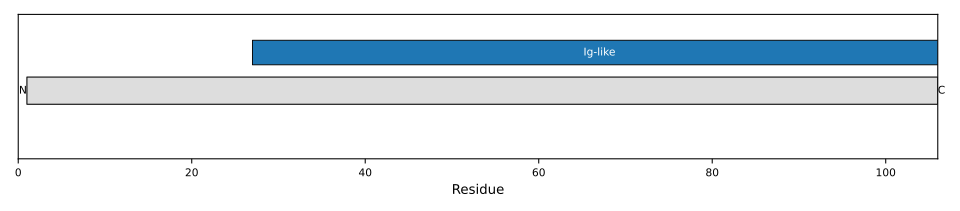
1: V region of the variable domain of T cell receptor (TR) gamma chain that participates in the antigen recognition (PubMed:24600447). Gamma-delta TRs recognize a variety of self and foreign non-peptide antigens frequently expressed at the epithelial boundaries between the host and external environment, including endogenous lipids presented by MH-like protein CD1D and phosphoantigens presented by butyrophilin-like molecule BTN3A1. Upon antigen recognition induces rapid, innate-like immune responses involved in pathogen clearance and tissue repair (PubMed:23348415, PubMed:28920588). Binding of gamma-delta TR complex to antigen triggers phosphorylation of immunoreceptor tyrosine-based activation motifs (ITAMs) in the CD3 chains by the LCK and FYN kinases, allowing the recruitment, phosphorylation, and activation of ZAP70 that facilitates phosphorylation of the scaffolding proteins LCP2 and LAT. This lead to the formation of a supramolecular signalosome that recruits the phospholipase PLCG1, resulting in calcium mobilization and ERK activation, ultimately leading to T cell expansion and differentiation into effector cells (PubMed:25674089). Gamma-delta TRs are produced through somatic rearrangement of a limited repertoire of variable (V), diversity (D), and joining (J) genes. The potential diversity of gamma-delta TRs is conferred by the unique ability to rearrange (D) genes in tandem and to utilize all three reading frames. The combinatorial diversity is considerably increased by the sequence exonuclease trimming and random nucleotide (N) region additions which occur during the V-(D)-J rearrangements (PubMed:24387714)