MyoD family inhibitor (Myogenic repressor I-mf)
1_MYQVS 6_ GQRPS 11_ GCDAP 16_ YGAPS 21_ AAPGP 26_ AQTLS 31_ LLPGL 36_ EVVTG 41_ STHPA 46_ EAAPE 51_ EGSLE 56_ EAATP 61_ MPQGN 66_ GPGIP 71_ QGLDS 76_ TDLDV 81_ PTEAV 86_ TCQPQ 91_ GNPLG 96_ CTPLL 101_ PNDSG 106_ HPSEL 111_ GGTRR 116_ AGNGA 121_ LGGPK 126_ AHRKL 131_ QTHPS 136_ LASQG 141_ SKKSK 146_ SSSKS 151_ TTSQI 156_ PLQAQ 161_ EDCCV 166_ HCILS 171_ CLFCE 176_ FLTLC 181_ NIVLD 186_ CATCG 191_ SCSSE 196_ DSCLC 201_ CCCCG 206_ SGECA 211_ DCDLP 216_ CDLDC 221_ GILDA 226_ CCESA 231_ DCLEI 236_ CMECC 241_GLCFS
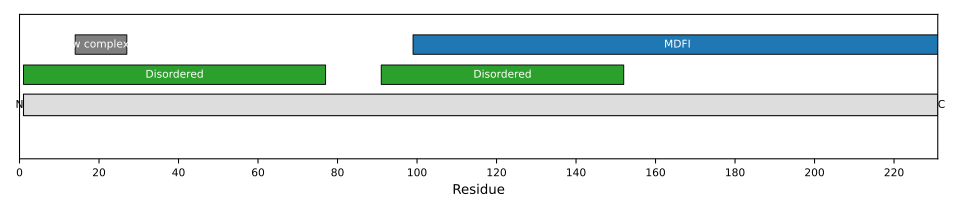
1: Inhibits the transactivation activity of the Myod family of myogenic factors and represses myogenesis (By similarity). Acts by associating with Myod family members and retaining them in the cytoplasm by masking their nuclear localization signals (By similarity). Can also interfere with the DNA-binding activity of Myod family members (By similarity). Plays an important role in trophoblast and chondrogenic differentiation (By similarity). Regulates the transcriptional activity of TCF7L1/TCF3 by interacting directly with TCF7L1/TCF3 and preventing it from binding DNA (By similarity). Binds to the axin complex, resulting in an increase in the level of free beta-catenin (By similarity). Affects axin regulation of the WNT and JNK signaling pathways (By similarity). Regulates the activity of mechanosensitive Piezo channel (PubMed:37590348)