Mitochondrial 2-oxodicarboxylate carrier (Solute carrier family 25 member 21)
1_MSAKP 6_ EVSLV 11_ REASR 16_ QIVAG 21_ GSAGL 26_ VEICL 31_ MHPLD 36_ VVKTR 41_ FQIQR 46_ CATDP 51_ NSYKS 56_ LVDSF 61_ RMIFQ 66_ MEGLF 71_ GFYKG 76_ ILPPI 81_ LAETP 86_ KRAVK 91_ FFTFE 96_ QYKKL 101_ LGYVS 106_ LSPAL 111_ TFAIA 116_ GLGSG 121_ LTEAI 126_ VVNPF 131_ EVVKV 136_ GLQAN 141_ RNTFA 146_ EQPST 151_ VGYAR 156_ QIIKK 161_ EGWGL 166_ QGLNK 171_ GLTAT 176_ LGRHG 181_ VFNMV 186_ YFGFY 191_ YNVKN 196_ MIPVN 201_ KDPIL 206_ EFWRK 211_ FGIGL 216_ LSGTI 221_ ASVIN 226_ IPFDV 231_ AKSRI 236_ QGPQP 241_ VPGEI 246_ KYRTC 251_ FKTMA 256_ TVYQE 261_ EGILA 266_ LYKGL 271_ LPKIM 276_ RLGPG 281_ GAVML 286_ LVYEY 291_TYSWL
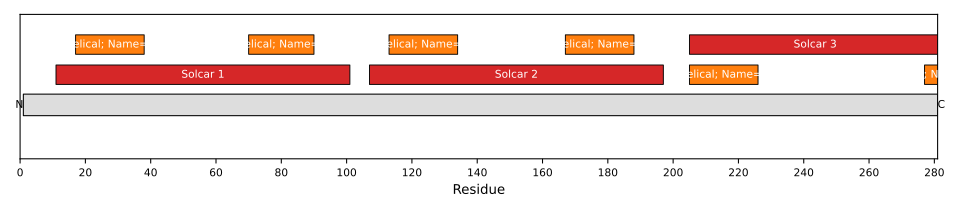
1: Transports dicarboxylates across the inner membranes of mitochondria by a counter-exchange mechanism (PubMed:11083877). Can transport 2-oxoadipate (2-oxohexanedioate), 2-oxoglutarate, adipate (hexanedioate), glutarate, and to a lesser extent, pimelate (heptanedioate), 2-oxopimelate (2-oxoheptanedioate), 2-aminoadipate (2-aminohexanedioate), oxaloacetate, and citrate (PubMed:11083877). Plays a central role in catabolism of lysine, hydroxylysine, and tryptophan, by transporting common metabolite intermediates (such as 2-oxoadipate) into the mitochondria, where it is converted into acetyl-CoA and can enter the citric acid (TCA) cycle (Probable)