WD repeat domain-containing protein 83 (Mitogen-activated protein kinase organizer 1) (MAPK organizer 1)
1_MAFPE 6_ PKPRP 11_ PELPQ 16_ KRLKT 21_ LDCGQ 26_ GAVRA 31_ VRFNV 36_ DGNYC 41_ LTCGS 46_ DKTLK 51_ LWNPL 56_ RGTLL 61_ RTYSG 66_ HGYEV 71_ LDAAG 76_ SFDNS 81_ SLCSG 86_ GGDKA 91_ VVLWD 96_ VASGQ 101_ VVRKF 106_ RGHAG 111_ KVNTV 116_ QFNEE 121_ ATVIL 126_ SGSID 131_ SSIRC 136_ WDCRS 141_ RRPEP 146_ VQTLD 151_ EARDG 156_ VSSVK 161_ VSDHE 166_ ILAGS 171_ VDGRV 176_ RRYDL 181_ RMGQL 186_ FSDYV 191_ GSPIT 196_ CTCFS 201_ RDGQC 206_ TLVSS 211_ LDSTL 216_ RLLDK 221_ DTGEL 226_ LGEYK 231_ GHKNQ 236_ EYKLD 241_ CCLSE 246_ RDTHV 251_ VSCSE 256_ DGKVF 261_ FWDLV 266_ EGALA 271_ LALPV 276_ GSGVV 281_ QSLAY 286_ HPTEP 291_ CLLTA 296_ MGGSV 301_ QCWRE 306_EAYEA
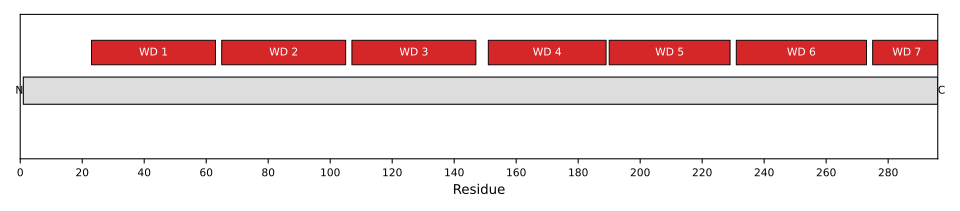
1: Molecular scaffold protein for various multimeric protein complexes. Acts as a module in the assembly of a multicomponent scaffold for the ERK pathway, linking ERK responses to specific agonists. At low concentrations it enhances ERK activation, whereas high concentrations lead to the inhibition of ERK activation. Also involved in response to hypoxia by acting as a negative regulator of HIF1A/HIF-1-alpha via its interaction with EGLN3/PHD3. May promote degradation of HIF1A. May act by recruiting signaling complexes to a specific upstream activator (By similarity). May also be involved in pre-mRNA splicing. Participates in tight junction development by regulating apico-basal polarity, a key step in tissue development and organization. Mechanistically, regulates the translocation of PAR6-aPKC from the cytoplasm to the apical surface by acting as an adapter between PARD6B AND CRB3 (PubMed:23439680). Also acts as a negative regulator of mTORC1 under nutrient-rich conditions by binding to the active Rag GTPases to inhibit mTORC1 localization to the lysosome and phosphorylation of downstream targets. This facilitates constitutive basal autophagy during nutrient availability (PubMed:38103557)