Probable G-protein coupled receptor 174
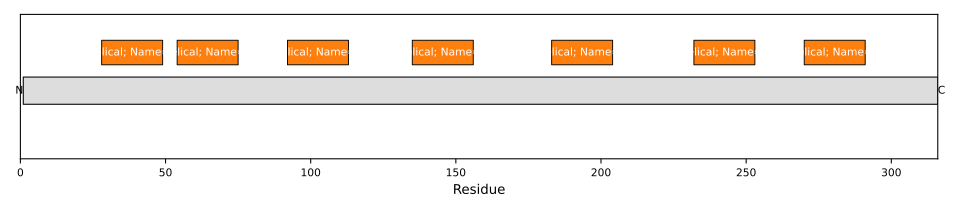
1_MPANY 6_ TCTRP 11_ DGDNT 16_ DFRYF 21_ IYAVT 26_ YTVIL 31_ VPGLI 36_ GNILA 41_ LWVFY 46_ GYMKE 51_ TKRAV 56_ IFMIN 61_ LAIAD 66_ LLQVL 71_ SLPLR 76_ IFYYL 81_ NHDWP 86_ FGPGL 91_ CMFCF 96_ YLKYV 101_ NMYAS 106_ IYFLV 111_ CISVR 116_ RFWFL 121_ MYPFR 126_ FHDCK 131_ QKYDL 136_ YISIA 141_ GWLII 146_ CLACV 151_ LFPLL 156_ RTSDD 161_ TSGNR 166_ TKCFV 171_ DLPTR 176_ NVNLA 181_ QSVVM 186_ MTIGE 191_ LIGFV 196_ TPLLI 201_ VLYCT 206_ WKTVL 211_ SLQDK 216_ YPMAQ 221_ DLGEK 226_ QKALK 231_ MILTC 236_ AGVFL 241_ ICFAP 246_ YHFSF 251_ PLDFL 256_ VKSNE 261_ IKSCL 266_ ARRVI 271_ LIFHS 276_ VALCL 281_ ASLNS 286_ CLDPV 291_ IYYFS 296_ TNEFR 301_ RRLSR 306_ QDLHD 311_ SIQLH 316_ AKSFV 321_ SNHTA 326_STMTP
1: G-protein-coupled receptor of lysophosphatidylserine (LysoPS) that plays different roles in immune response (PubMed:36823105). Plays a negative role in regulatory T-cell accumulation and homeostasis. Under inflammatory conditions where LysoPS production increases, contributes to the down-regulation of regulatory T-cell activity to favor effector response. Mediates the suppression of IL-2 production in activated T-lymphocytes leading to inhibition of growth, proliferation and differentiation of T-cells. Mechanistically, acts via G(s)-containing heterotrimeric G proteins to trigger elevated cyclic AMP levels and protein kinase A/PKA activity, which may in turn act to antagonize proximal TCR signaling. Plays an important role in the initial period of sepsis through the regulation of macrophage polarization and pro- and anti-inflammatory cytokine secretions. Upon testosterone treatment, acts as a receptor for CCL21 and subsequently triggers through G(q)-alpha and G(12)/G(13) proteins a calcium flux leading to chemotactic effects on activated B-cells. Signals via GNA13 and PKA to promote CD86 up-regulation by follicular B-cells