C-type lectin domain family 7 member A (Beta-glucan receptor) (C-type lectin superfamily member 12) (Dendritic cell-associated C-type lectin 1) (DC-associated C-type lectin 1) (Dectin-1) (CD antigen CD369)
1_MEYHP 6_ DLENL 11_ DEDGY 16_ TQLHF 21_ DSQSN 26_ TRIAV 31_ VSEKG 36_ SCAAS 41_ PPWRL 46_ IAVIL 51_ GILCL 56_ VILVI 61_ AVVLG 66_ TMAIW 71_ RSNSG 76_ SNTLE 81_ NGYFL 86_ SRNKE 91_ NHSQP 96_ TQSSL 101_ EDSVT 106_ PTKAV 111_ KTTGV 116_ LSSPC 121_ PPNWI 126_ IYEKS 131_ CYLFS 136_ MSLNS 141_ WDGSK 146_ RQCWQ 151_ LGSNL 156_ LKIDS 161_ SNELG 166_ FIVKQ 171_ VSSQP 176_ DNSFW 181_ IGLSR 186_ PQTEV 191_ PWLWE 196_ DGSTF 201_ SSNLF 206_ QIRTT 211_ ATQEN 216_ PSPNC 221_ VWIHV 226_ SVIYD 231_ QLCSV 236_ PSYSI 241_CEKKF
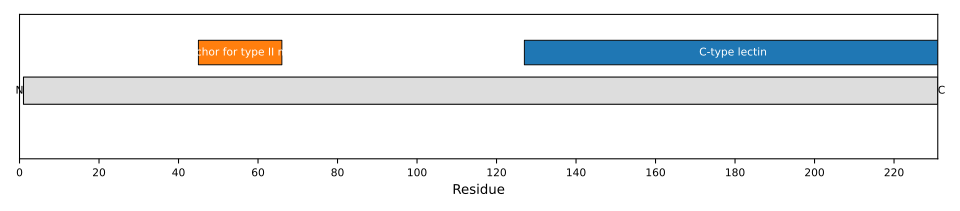
1: Lectin that functions as a pattern recognizing receptor (PRR) specific for beta-1,3-linked and beta-1,6-linked glucans, which constitute cell wall constituents from pathogenic bacteria and fungi (PubMed:11567029, PubMed:12423684). Necessary for the TLR2-mediated inflammatory response and activation of NF-kappa-B: upon beta-glucan binding, recruits SYK via its ITAM motif and promotes a signaling cascade that activates some CARD domain-BCL10-MALT1 (CBM) signalosomes, leading to the activation of NF-kappa-B and MAP kinase p38 (MAPK11, MAPK12, MAPK13 and/or MAPK14) pathways which stimulate expression of genes encoding pro-inflammatory cytokines and chemokines (By similarity). Enhances cytokine production in macrophages and dendritic cells (By similarity). Mediates production of reactive oxygen species in the cell (By similarity). Mediates phagocytosis of C.albicans conidia (PubMed:17230442). Binds T-cells in a way that does not involve their surface glycans and plays a role in T-cell activation. Stimulates T-cell proliferation. Induces phosphorylation of SCIMP after binding beta-glucans (By similarity)