E3 ubiquitin-protein ligase TRIM9 (EC 2.3.2.27) (RING finger protein 91) (RING-type E3 ubiquitin transferase TRIM9) (Tripartite motif-containing protein 9)
1_MEEME 6_ EELKC 11_ PVCGS 16_ FYREP 21_ IILPC 26_ SHNLC 31_ QACAR 36_ NILVQ 41_ TPESE 46_ SPQSH 51_ RAAGS 56_ GVSDY 61_ DYLDL 66_ DKMSL 71_ YSEAD 76_ SGYGS 81_ YGGFA 86_ SAPTT 91_ PCQKS 96_ PNGVR 101_ VFPPA 106_ MPPPA 111_ THLSP 116_ ALAPV 121_ PRNSC 126_ ITCPQ 131_ CHRSL 136_ ILDDR 141_ GLRGF 146_ PKNRV 151_ LEGVI 156_ DRYQQ 161_ SKAAA 166_ LKCQL 171_ CEKAP 176_ KEATV 181_ MCEQC 186_ DVFYC 191_ DPCRL 196_ RCHPP 201_ RGPLA 206_ KHRLV 211_ PPAQG 216_ RVSRR 221_ LSPRK 226_ VSTCT 231_ DHELE 236_ NHSMY 241_ CVQCK 246_ MPVCY 251_ QCLEE 256_ GKHSS 261_ HEVKA 266_ LGAMW 271_ KLHKS 276_ QLSQA 281_ LNGLS 286_ DRAKE 291_ AKEFL 296_ VQLRN 301_ MVQQI 306_ QENSV 311_ EFEAC 316_ LVAQC 321_ DALID 326_ ALNRR 331_ KAQLL 336_ ARVNK 341_ EHEHK 346_ LKVVR 351_ DQISH 356_ CTVKL 361_ RQTTG 366_ LMEYC 371_ LEVIK 376_ ENDPS 381_ GFLQI 386_ SDALI 391_ RRVHL 396_ TEDQW 401_ GKGTL 406_ TPRMT 411_ TDFDL 416_ SLDNS 421_ PLLQS 426_ IHQLD 431_ FVQVK 436_ ASSPV 441_ PATPI 446_ LQLEE 451_ CCTHN 456_ NSATL 461_ SWKQP 466_ PLSTV 471_ PADGY 476_ ILELD 481_ DGNGG 486_ QFREV 491_ YVGKE 496_ TMCTV 501_ DGLHF 506_ NSTYN 511_ ARVKA 516_ FNKTG 521_ VSPYS 526_ KTLVL 531_ QTSEV 536_ AWFAF 541_ DPGSA 546_ HSDII 551_ LSNDN 556_ LTVTC 561_ SSYDD 566_ RVVLG 571_ KTGFS 576_ KGIHY 581_ WELTV 586_ DRYDN 591_ HPDPA 596_ FGVAR 601_ MDVMK 606_ DVMLG 611_ KDDKA 616_ WAMYV 621_ DNNRS 626_ WFMHN 631_ NSHTN 636_ RTEGG 641_ ITKGA 646_ TIGVL 651_ LDLNR 656_ KNLTF 661_ FINDE 666_ QQGPI 671_ AFDNV 676_ EGLFF 681_ PAVSL 686_ NRNVQ 691_ VTLHT 696_ GLPVP 701_DFYSS
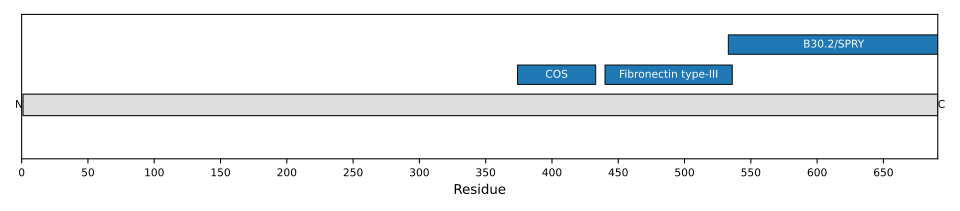
1: E3 ubiquitin-protein ligase which ubiquitinates itself in cooperation with an E2 enzyme UBE2D2/UBC4 and serves as a targeting signal for proteasomal degradation. May play a role in regulation of neuronal functions and may also participate in the formation or breakdown of abnormal inclusions in neurodegenerative disorders. May act as a regulator of synaptic vesicle exocytosis by controlling the availability of SNAP25 for the SNARE complex formation