Caspase recruitment domain-containing protein 9 (hCARD9)
1_MSDYE 6_ NDDEC 11_ WSVLE 16_ GFRVT 21_ LTSVI 26_ DPSRI 31_ TPYLR 36_ QCKVL 41_ NPDDE 46_ EQVLS 51_ DPNLV 56_ IRKRK 61_ VGVLL 66_ DILQR 71_ TGHKG 76_ YVAFL 81_ ESLEL 86_ YYPQL 91_ YKKVT 96_ GKEPA 101_ RVFSM 106_ IIDAS 111_ GESGL 116_ TQLLM 121_ TEVMK 126_ LQKKV 131_ QDLTA 136_ LLSSK 141_ DDFIK 146_ ELRVK 151_ DSLLR 156_ KHQER 161_ VQRLK 166_ EECEA 171_ GSREL 176_ KRCKE 181_ ENYDL 186_ AMRLA 191_ HQSEE 196_ KGAAL 201_ MRNRD 206_ LQLEI 211_ DQLKH 216_ SLMKA 221_ EDDCK 226_ VERKH 231_ TLKLR 236_ HAMEQ 241_ RPSQE 246_ LLWEL 251_ QQEKA 256_ LLQAR 261_ VQELE 266_ ASVQE 271_ GKLDR 276_ SSPYI 281_ QVLEE 286_ DWRQA 291_ LRDHQ 296_ EQANT 301_ IFSLR 306_ KDLRQ 311_ GEARR 316_ LRCME 321_ EKEMF 326_ ELQCL 331_ ALRKD 336_ SKMYK 341_ DRIEA 346_ ILLQM 351_ EEVAI 356_ ERDQA 361_ IATRE 366_ ELHAQ 371_ HARGL 376_ QEKDA 381_ LRKQV 386_ RELGE 391_ KADEL 396_ QLQVF 401_ QCEAQ 406_ LLAVE 411_ GRLRR 416_ QQLET 421_ LVLSS 426_ DLEDG 431_ SPRRS 436_ QELSL 441_ PQDLE 446_ DTQLS 451_ DKGCL 456_ AGGGS 461_ PKQPF 466_ AALHQ 471_ EQVLR 476_ NPHDA 481_ GLSSG 486_ EPPEK 491_ ERRRL 496_ KESFE 501_ NYRRK 506_ RALRK 511_ MQKGW 516_ RQGEE 521_ DRENT 526_ TGSDN 531_TDTEG
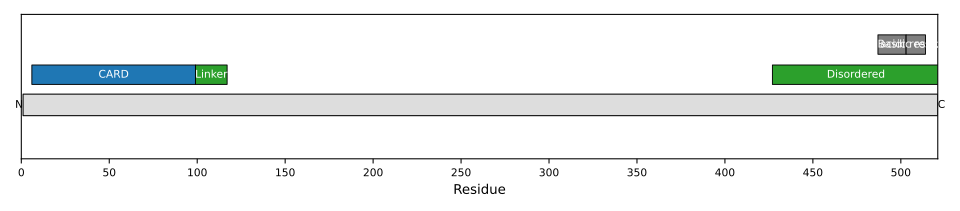
1: Adapter protein that plays a key role in innate immune response against fungi by forming signaling complexes downstream of C-type lectin receptors (PubMed:26961233, PubMed:33558980). CARD9-mediated signals are essential for antifungal immunity against a subset of fungi from the phylum Ascomycota (PubMed:24231284, PubMed:25057046, PubMed:25702837, PubMed:26521038, PubMed:26679537, PubMed:26961233, PubMed:27777981, PubMed:29080677, PubMed:33558980). Transduces signals in myeloid cells downstream of C-type lectin receptors CLEC7A (dectin-1), CLEC6A (dectin-2) and CLEC4E (Mincle), which detect pathogen-associated molecular pattern metabolites (PAMPs), such as fungal carbohydrates, and trigger CARD9 activation (By similarity). Upon activation, CARD9 homooligomerizes to form a nucleating helical template that recruits BCL10 via CARD-CARD interaction, thereby promoting polymerization of BCL10 and subsequent recruitment of MALT1: this leads to activation of NF-kappa-B and MAP kinase p38 (MAPK11, MAPK12, MAPK13 and/or MAPK14) pathways which stimulate expression of genes encoding pro-inflammatory cytokines and chemokines (PubMed:11053425, PubMed:26488816, PubMed:26961233, PubMed:31296852, PubMed:33558980). CARD9 signaling in antigen-presenting cells links innate sensing of fungi to the activation of adaptive immunity and provides a cytokine milieu that induces the development and subsequent of interleukin 17-producing T helper (Th17) cells (PubMed:24231284). Also involved in activation of myeloid cells via classical ITAM-associated receptors and TLR: required for TLR-mediated activation of MAPK, while it is not required for TLR-induced activation of NF-kappa-B (By similarity). CARD9 can also be engaged independently of BCL10: forms a complex with RASGRF1 downstream of C-type lectin receptors, which recruits and activates HRAS, leading to ERK activation and the production of cytokines (By similarity). Acts as an important regulator of the intestinal commensal fungi (mycobiota) component of the gut microbiota (PubMed:33548172). Plays an essential role in antifungal immunity against dissemination of gut fungi: acts by promoting induction of antifungal IgG antibodies response in CX3CR1(+) macrophages to confer protection against disseminated C.albicans or C.auris infection (PubMed:33548172). Also mediates immunity against other pathogens, such as certain bacteria, viruses and parasites; CARD9 signaling is however redundant with other innate immune responses (By similarity). In response to L.monocytogenes infection, required for the production of inflammatory cytokines activated by intracellular peptidoglycan: acts by connecting NOD2 recognition of peptidoglycan to downstream activation of MAP kinases (MAPK) without activating NF-kappa-B (By similarity)