Prolyl hydroxylase EGLN3 (EC 1.14.11.-) (Egl nine homolog 3) (EC 1.14.11.29) (HPH-1) (Hypoxia-inducible factor prolyl hydroxylase 3) (HIF-PH3) (HIF-prolyl hydroxylase 3) (HPH-3) (Prolyl hydroxylase domain-containing protein 3) (PHD3)
1_MPLGH 6_ IMRLD 11_ LEKIA 16_ LEYIV 21_ PCLHE 26_ VGFCY 31_ LDNFL 36_ GEVVG 41_ DCVLE 46_ RVKQL 51_ HCTGA 56_ LRDGQ 61_ LAGPR 66_ AGVSK 71_ RHLRG 76_ DQITW 81_ IGGNE 86_ EGCEA 91_ ISFLL 96_ SLIDR 101_ LVLYC 106_ GSRLG 111_ KYYVK 116_ ERSKA 121_ MVACY 126_ PGNGT 131_ GYVRH 136_ VDNPN 141_ GDGRC 146_ ITCIY 151_ YLNKN 156_ WDAKL 161_ HGGIL 166_ RIFPE 171_ GKSFI 176_ ADVEP 181_ IFDRL 186_ LFFWS 191_ DRRNP 196_ HEVQP 201_ SYATR 206_ YAMTV 211_ WYFDA 216_ EERAE 221_ AKKKF 226_ RNLTR 231_KTESA
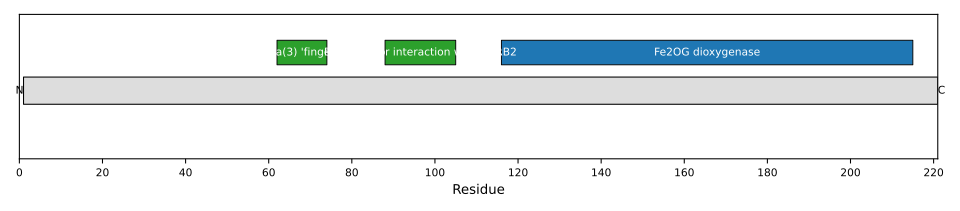
1: Prolyl hydroxylase that mediates hydroxylation of proline residues in target proteins, such as PKM, TELO2, ATF4 and HIF1A (PubMed:19584355, PubMed:20978507, PubMed:21483450, PubMed:21575608, PubMed:21620138, PubMed:22797300). Target proteins are preferentially recognized via a LXXLAP motif. Cellular oxygen sensor that catalyzes, under normoxic conditions, the post-translational formation of 4-hydroxyproline in hypoxia-inducible factor (HIF) alpha proteins (PubMed:11595184, PubMed:12181324). Hydroxylates a specific proline found in each of the oxygen-dependent degradation (ODD) domains (N-terminal, NODD, and C-terminal, CODD) of HIF1A (PubMed:11595184, PubMed:12181324). Also hydroxylates HIF2A (PubMed:11595184, PubMed:12181324). Has a preference for the CODD site for both HIF1A and HIF2A (PubMed:11595184, PubMed:12181324). Hydroxylation on the NODD site by EGLN3 appears to require prior hydroxylation on the CODD site (PubMed:11595184, PubMed:12181324). Hydroxylated HIFs are then targeted for proteasomal degradation via the von Hippel-Lindau ubiquitination complex (PubMed:11595184, PubMed:12181324). Under hypoxic conditions, the hydroxylation reaction is attenuated allowing HIFs to escape degradation resulting in their translocation to the nucleus, heterodimerization with HIF1B, and increased expression of hypoxy-inducible genes (PubMed:11595184, PubMed:12181324). ELGN3 is the most important isozyme in limiting physiological activation of HIFs (particularly HIF2A) in hypoxia. Also hydroxylates PKM in hypoxia, limiting glycolysis (PubMed:21483450, PubMed:21620138). Under normoxia, hydroxylates and regulates the stability of ADRB2 (PubMed:19584355). Regulator of cardiomyocyte and neuronal apoptosis. In cardiomyocytes, inhibits the anti-apoptotic effect of BCL2 by disrupting the BAX-BCL2 complex (PubMed:20849813). In neurons, has a NGF-induced proapoptotic effect, probably through regulating CASP3 activity (PubMed:16098468). Also essential for hypoxic regulation of neutrophilic inflammation (PubMed:21317538). Plays a crucial role in DNA damage response (DDR) by hydroxylating TELO2, promoting its interaction with ATR which is required for activation of the ATR/CHK1/p53 pathway (PubMed:22797300). Also mediates hydroxylation of ATF4, leading to decreased protein stability of ATF4 (Probable)