G-protein coupled receptor 35 (Kynurenic acid receptor) (KYNA receptor)
1_MNGTY 6_ NTCGS 11_ SDLTW 16_ PPAIK 21_ LGFYA 26_ YLGVL 31_ LVLGL 36_ LLNSL 41_ ALWVF 46_ CCRMQ 51_ QWTET 56_ RIYMT 61_ NLAVA 66_ DLCLL 71_ CTLPF 76_ VLHSL 81_ RDTSD 86_ TPLCQ 91_ LSQGI 96_ YLTNR 101_ YMSIS 106_ LVTAI 111_ AVDRY 116_ VAVRH 121_ PLRAR 126_ GLRSP 131_ RQAAA 136_ VCAVL 141_ WVLVI 146_ GSLVA 151_ RWLLG 156_ IQEGG 161_ FCFRS 166_ TRHNF 171_ NSMAF 176_ PLLGF 181_ YLPLA 186_ VVVFC 191_ SLKVV 196_ TALAQ 201_ RPPTD 206_ VGQAE 211_ ATRKA 216_ ARMVW 221_ ANLLV 226_ FVVCF 231_ LPLHV 236_ GLTVR 241_ LAVGW 246_ NACAL 251_ LETIR 256_ RALYI 261_ TSKLS 266_ DANCC 271_ LDAIC 276_ YYYMA 281_ KEFQE 286_ ASALA 291_ VAPSA 296_ KAHKS 301_QDSLC
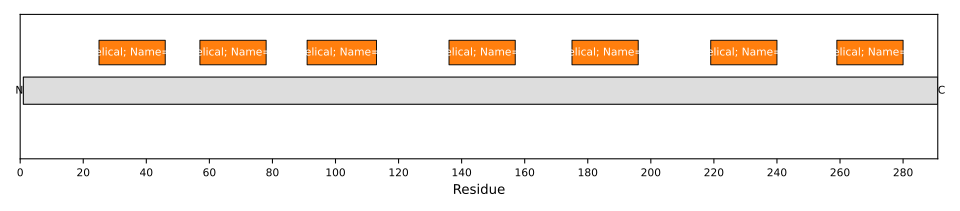
1: G-protein coupled receptor that binds to several ligands including the tryptophan metabolite kynurenic acid (KYNA), lysophosphatidic acid (LPA) or 5-hydroxyindoleacetic acid (5-HIAA) with high affinity, leading to rapid and transient activation of numerous intracellular signaling pathways (PubMed:16754668, PubMed:20361937, PubMed:35148838). Plays a role in neutrophil recruitment to sites of inflammation and bacterial clearance through the major serotonin metabolite 5-HIAA that acts as a physiological ligand (PubMed:35148838). Stimulates lipid metabolism, thermogenic, and anti-inflammatory gene expression in adipose tissue once activated by kynurenic acid (By similarity). In macrophages, activation by lysophosphatidic acid promotes GPR35-induced signaling with a distinct transcriptional profile characterized by TNF production associated with ERK and NF-kappa-B activation. In turn, induces chemotaxis of macrophages (By similarity)