Neuroglobin
1_MERPE 6_ PELIR 11_ QSWRA 16_ VSRSP 21_ LEHGT 26_ VLFAR 31_ LFALE 36_ PDLLP 41_ LFQYN 46_ CRQFS 51_ SPEDC 56_ LSSPE 61_ FLDHI 66_ RKVML 71_ VIDAA 76_ VTNVE 81_ DLSSL 86_ EEYLA 91_ SLGRK 96_ HRAVG 101_ VKLSS 106_ FSTVG 111_ ESLLY 116_ MLEKC 121_ LGPAF 126_ TPATR 131_ AAWSQ 136_ LYGAV 141_ VQAMS 146_RGWDG
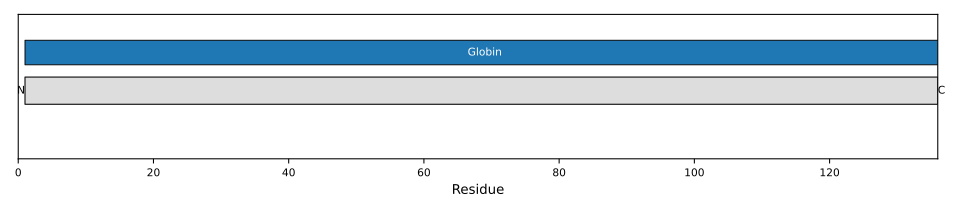
1: Monomeric globin with a bis-histidyl six-coordinate heme-iron atom through which it can bind dioxygen, carbon monoxide and nitric oxide (PubMed:11473128, PubMed:12962627, PubMed:24699645). Could help transport oxygen and increase its availability to the metabolically active neuronal tissues, though its low quantity in tissues as well as its high affinity for dioxygen, which may limit its oxygen-releasing ability, argue against it (PubMed:11473128, PubMed:12860983, PubMed:12962627, PubMed:24699645). The ferrous/deoxygenated form exhibits a nitrite reductase activity and it could produce nitric oxide which in turn inhibits cellular respiration in response to hypoxia (PubMed:21296891). In its ferrous/deoxygenated state, it may also exhibit GDI (Guanine nucleotide Dissociation Inhibitor) activity toward heterotrimeric G-alpha proteins, thereby regulating signal transduction to facilitate neuroprotective responses in the wake of hypoxia and associated oxidative stress (PubMed:12860983, PubMed:18302932)