GTP-binding protein SAR1a (COPII-associated small GTPase)
1_MSFIF 6_ EWIYN 11_ GFSSV 16_ LQFLG 21_ LYKKS 26_ GKLVF 31_ LGLDN 36_ AGKTT 41_ LLHML 46_ KDDRL 51_ GQHVP 56_ TLHPT 61_ SEELT 66_ IAGMT 71_ FTTFD 76_ LGGHE 81_ QARRV 86_ WKNYL 91_ PAING 96_ IVFLV 101_ DCADH 106_ SRLVE 111_ SKVEL 116_ NALMT 121_ DETIS 126_ NVPIL 131_ ILGNK 136_ IDRTD 141_ AISEE 146_ KLREI 151_ FGLYG 156_ QTTGK 161_ GNVTL 166_ KELNA 171_ RPMEV 176_ FMCSV 181_ LKRQG 186_ YGEGF 191_RWLSQ
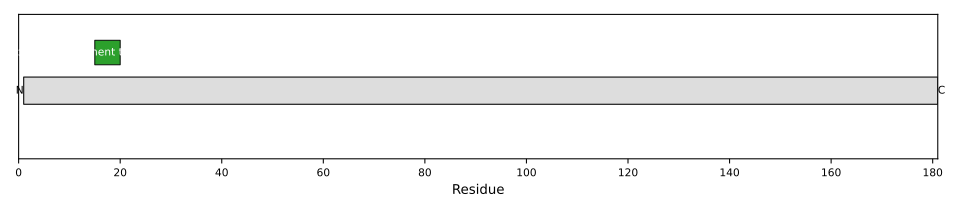
1: Small GTPase that cycles between an active GTP-bound and an inactive GDP-bound state and mainly functions in vesicle-mediated endoplasmic reticulum (ER) to Golgi transport. The active GTP-bound form inserts into the endoplasmic reticulum membrane where it recruits the remainder of the coat protein complex II/COPII. The coat protein complex II assembling and polymerizing on endoplasmic reticulum membrane is responsible for both the sorting of cargos and the deformation and budding of membranes into vesicles destined to the Golgi (PubMed:23433038, PubMed:32358066, PubMed:36369712). The GTPase activity of SAR1 by controlling the timing of COPII budding regulates the size of the formed vesicles and is important for cargo selection depending on their size (PubMed:32358066). Together with SEC16A, forms the organized scaffold defining endoplasmic reticulum exit sites (ERES), some specific domains of the endoplasmic reticulum where COPII vesicles form (PubMed:17005010). In addition to its role in vesicle trafficking, can also function as a leucine sensor regulating TORC1 signaling and more indirectly cellular metabolism, growth and survival. In absence of leucine, interacts with the GATOR2 complex via MIOS and inhibits TORC1 signaling. The binding of leucine abrogates the interaction with GATOR2 and the inhibition of the TORC1 signaling. This function is completely independent of the GTPase activity of SAR1B (PubMed:34290409)