E3 ubiquitin-protein ligase RNF146 (EC 2.3.2.27) (Dactylidin) (Iduna) (RING finger protein 146) (RING-type E3 ubiquitin transferase RNF146)
1_MMAGC 6_ GEIDH 11_ SINML 16_ PTNRK 21_ ANESC 26_ SNTAP 31_ SLTVP 36_ ECAIC 41_ LQTCV 46_ HPVSL 51_ PCKHV 56_ FCYLC 61_ VKGAS 66_ WLGKR 71_ CALCR 76_ QEIPE 81_ DFLDK 86_ PTLLS 91_ PEELK 96_ AASRG 101_ NGEYA 106_ WYYEG 111_ RNGWW 116_ QYDER 121_ TSREL 126_ EDAFS 131_ KGKKN 136_ TEMLI 141_ AGFLY 146_ VADLE 151_ NMVQY 156_ RRNEH 161_ GRRRK 166_ IKRDI 171_ IDIPK 176_ KGVAG 181_ LRLDC 186_ DANTV 191_ NLARE 196_ SSADG 201_ ADSVS 206_ AQSGA 211_ SVQPL 216_ VSSVR 221_ PLTSV 226_ DGQLT 231_ SPATP 236_ SPDAS 241_ TSLED 246_ SFAHL 251_ QLSGD 256_ NTAER 261_ SHRGE 266_ GEEDH 271_ ESPSS 276_ GRVPA 281_ PDTSI 286_ EETES 291_ DASSD 296_ SEDVS 301_ AVVAQ 306_ HSLTQ 311_ QRLLV 316_ SNANQ 321_ TVPDR 326_ SDRSG 331_ TDRSV 336_ AGGGT 341_ VSVSV 346_ RSRRP 351_DGQCT
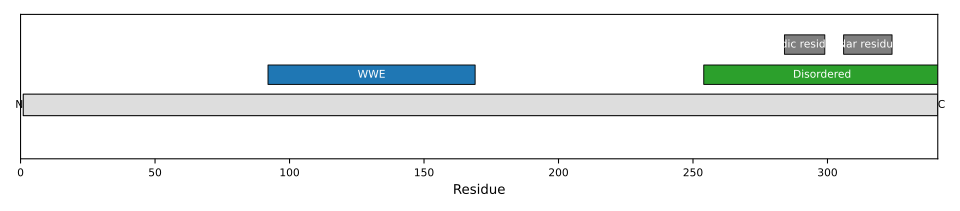
1: E3 ubiquitin-protein ligase that specifically binds poly-ADP-ribosylated (PARsylated) proteins and mediates their ubiquitination and subsequent degradation (PubMed:21478859, PubMed:21799911, PubMed:22267412). May regulate many important biological processes, such as cell survival and DNA damage response (PubMed:21825151, PubMed:22267412). Acts as an activator of the Wnt signaling pathway by mediating the ubiquitination of PARsylated AXIN1 and AXIN2, 2 key components of the beta-catenin destruction complex (PubMed:21478859, PubMed:21799911). Acts in cooperation with tankyrase proteins (TNKS and TNKS2), which mediate PARsylation of target proteins AXIN1, AXIN2, BLZF1, CASC3, TNKS and TNKS2 (PubMed:21799911). Recognizes and binds tankyrase-dependent PARsylated proteins via its WWE domain and mediates their ubiquitination, leading to their degradation (PubMed:21799911). Different ubiquitin linkage types have been observed: TNKS2 undergoes ubiquitination at 'Lys-48' and 'Lys-63', while AXIN1 is only ubiquitinated at 'Lys-48' (PubMed:21799911). May regulate TNKS and TNKS2 subcellular location, preventing aggregation at a centrosomal location (PubMed:21799911). Neuroprotective protein (PubMed:21602803). Protects the brain against N-methyl-D-aspartate (NMDA) receptor-mediated glutamate excitotoxicity and ischemia, by interfering with PAR-induced cell death, called parthanatos (By similarity). Prevents nuclear translocation of AIFM1 in a PAR-binding dependent manner (By similarity). Does not affect PARP1 activation (By similarity). Protects against cell death induced by DNA damaging agents, such as N-methyl-N-nitro-N-nitrosoguanidine (MNNG) and rescues cells from G1 arrest (By similarity). Promotes cell survival after gamma-irradiation (PubMed:21825151). Facilitates DNA repair (PubMed:21825151)