DNA damage-inducible transcript 4 protein (HIF-1 responsive protein RTP801) (Protein regulated in development and DNA damage response 1) (REDD-1)
1_MPSLW 6_ DRFSS 11_ SSTSS 16_ SPSSL 21_ PRTPT 26_ PDRPP 31_ RSAWG 36_ SATRE 41_ EGFDR 46_ STSLE 51_ SSDCE 56_ SLDSS 61_ NSGFG 66_ PEEDT 71_ AYLDG 76_ VSLPD 81_ FELLS 86_ DPEDE 91_ HLCAN 96_ LMQLL 101_ QESLA 106_ QARLG 111_ SRRPA 116_ RLLMP 121_ SQLVS 126_ QVGKE 131_ LLRLA 136_ YSEPC 141_ GLRGA 146_ LLDVC 151_ VEQGK 156_ SCHSV 161_ GQLAL 166_ DPSLV 171_ PTFQL 176_ TLVLR 181_ LDSRL 186_ WPKIQ 191_ GLFSS 196_ ANSPF 201_ LPGFS 206_ QSLTL 211_ STGFR 216_ VIKKK 221_ LYSSE 226_QLLIE
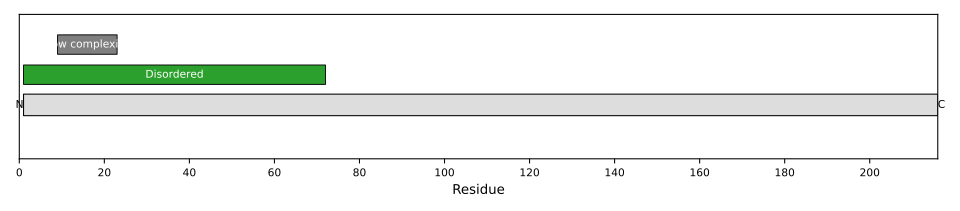
1: Regulates cell growth, proliferation and survival via inhibition of the activity of the mammalian target of rapamycin complex 1 (mTORC1). Inhibition of mTORC1 is mediated by a pathway that involves DDIT4/REDD1, AKT1, the TSC1-TSC2 complex and the GTPase RHEB. Plays an important role in responses to cellular energy levels and cellular stress, including responses to hypoxia and DNA damage. Regulates p53/TP53-mediated apoptosis in response to DNA damage via its effect on mTORC1 activity. Its role in the response to hypoxia depends on the cell type; it mediates mTORC1 inhibition in fibroblasts and thymocytes, but not in hepatocytes (By similarity). Required for mTORC1-mediated defense against viral protein synthesis and virus replication (By similarity). Inhibits neuronal differentiation and neurite outgrowth mediated by NGF via its effect on mTORC1 activity. Required for normal neuron migration during embryonic brain development. Plays a role in neuronal cell death