Cell growth-regulating nucleolar protein
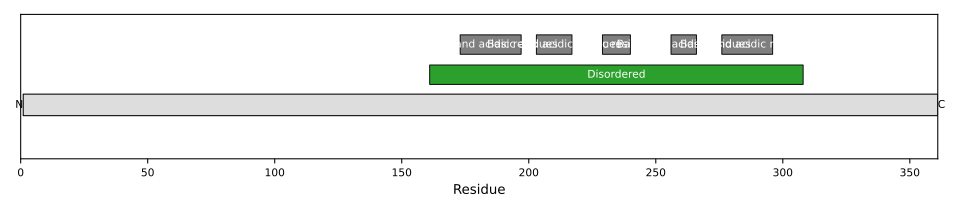
1_MVFFT 6_ CNACG 11_ ESVKK 16_ IQVEK 21_ HVSVC 26_ RNCEC 31_ LSCID 36_ CGKDF 41_ WGDDY 46_ KNHVK 51_ CISED 56_ QKYGG 61_ KGYEG 66_ KTHKG 71_ DIKQQ 76_ AWIQK 81_ ISELI 86_ KRPNV 91_ SPKVR 96_ ELLEQ 101_ ISAFD 106_ NVPRK 111_ KAKFQ 116_ NWMKN 121_ SLKVH 126_ NESIL 131_ DQVWN 136_ IFSEA 141_ SNSEP 146_ VNKEQ 151_ DQRPL 156_ HPVAN 161_ PHAEI 166_ STKVP 171_ ASKVK 176_ DAVEQ 181_ QGEVK 186_ KNKRE 191_ RKEER 196_ QKKRK 201_ REKKE 206_ LKLEN 211_ HQENS 216_ RNQKP 221_ KKRKK 226_ GQEAD 231_ LEAGG 236_ EEVPE 241_ ANGSA 246_ GKRSK 251_ KKKQR 256_ KDSAS 261_ EEEAR 266_ VGAGK 271_ RKRRH 276_ SEVET 281_ DSKKK 286_ KMKLP 291_ EHPEG 296_ GEPED 301_ DEAPA 306_ KGKFN 311_ WKGTI 316_ KAILK 321_ QAPDN 326_ EITIK 331_ KLRKK 336_ VLAQY 341_ YTVTD 346_ EHHRS 351_ EEELL 356_ VIFNK 361_ KISKN 366_ PTFKL 371_LKDKV
1: Plays a role in the maintenance of the appropriate processing of 47S/45S pre-rRNA to 32S/30S pre-rRNAs and their subsequent processing to produce 18S and 28S rRNAs (PubMed:24495227). Also acts at the level of transcription regulation. Along with PRMT5, binds the gamma-globin (HBG1/HBG2) promoter and represses its expression (PubMed:25092918). In neuroblastoma cells, may also repress the expression of oxidative stress genes, including CHAC1, HMOX1, SLC7A11, ULBP1 and SNORD41 that encodes a small nucleolar RNA (PubMed:28686580). Preferentially binds to a DNA motif containing 5'-GGTTAT-3' (PubMed:25092918). Negatively regulates the antiviral innate immune response by targeting IRF3 and impairing its DNA-binding activity (PubMed:31413131). In addition, inhibits NF-kappa-B-mediated expression of pro-inflammatory cytokines (PubMed:31413131). Stimulates phagocytosis of photoreceptor outer segments by retinal pigment epithelial cells (By similarity). Prevents nucleolin/NCL self-cleavage, maintaining a normal steady-state level of NCL protein in undifferentiated embryonic stem cells (ESCs), which in turn is essential for ESC self-renewal (By similarity)