E3 ubiquitin-protein ligase MARCHF2 (EC 2.3.2.27) (Membrane-associated RING finger protein 2) (Membrane-associated RING-CH protein II) (MARCH-II) (RING finger protein 172) (RING-type E3 ubiquitin transferase MARCHF2)
1_MTTGD 6_ CCHLP 11_ GSLCD 16_ CSGSP 21_ AFSKV 26_ VEATG 31_ LGPPQ 36_ YVAQV 41_ TSRDG 46_ RLLST 51_ VIRAL 56_ DTPSD 61_ GPFCR 66_ ICHEG 71_ ANGEC 76_ LLSPC 81_ GCTGT 86_ LGAVH 91_ KSCLE 96_ KWLSS 101_ SNTSY 106_ CELCH 111_ TEFAV 116_ EKRPR 121_ PLTEW 126_ LKDPG 131_ PRTEK 136_ RTLCC 141_ DMVCF 146_ LFITP 151_ LAAIS 156_ GWLCL 161_ RGAQD 166_ HLRLH 171_ SQLEA 176_ VGLIA 181_ LTIAL 186_ FTIYV 191_ LWTLV 196_ SFRYH 201_ CQLYS 206_ EWRKT 211_ NQKVR 216_ LKIRE 221_ ADSPE 226_ GPQHS 231_ PLAAG 236_ LLKKV 241_AEETP
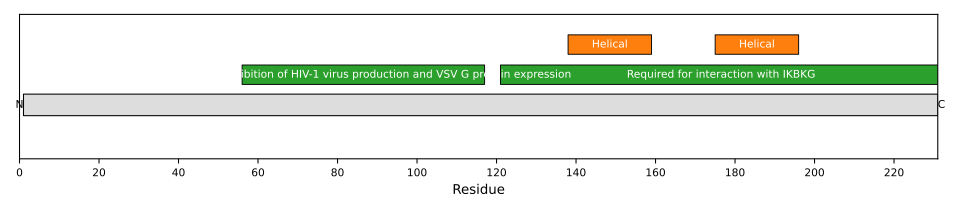
1: E3 ubiquitin-protein ligase that may mediate ubiquitination of TFRC and CD86, and promote their subsequent endocytosis and sorting to lysosomes via multivesicular bodies. E3 ubiquitin ligases accept ubiquitin from an E2 ubiquitin-conjugating enzyme in the form of a thioester and then directly transfer the ubiquitin to targeted substrates (PubMed:14722266, PubMed:16428329). Together with GOPC/CAL mediates the ubiquitination and lysosomal degradation of CFTR (PubMed:23818989). Ubiquitinates and therefore mediates the degradation of DLG1 (PubMed:17980554). Regulates the intracellular trafficking and secretion of alpha1-antitrypsin/SERPINA1 and HP/haptoglobin via ubiquitination and degradation of the cargo receptor ERGIC3 (PubMed:31142615). Negatively regulates the antiviral and antibacterial immune response by repression of the NF-kB and type 1 IFN signaling pathways, via MARCHF2-mediated K48-linked polyubiquitination of IKBKG/NEMO, resulting in its proteasomal degradation (PubMed:32935379). May be involved in endosomal trafficking through interaction with STX6 (PubMed:15689499)
2: (Microbial infection) Positively regulates the degradation of Vesicular stomatitis virus (VSV) G protein via the lysosomal degradation pathway (PubMed:29573664). Represses HIV-1 viral production and may inhibit the translocation of HIV-1 env to the cell surface, resulting in decreased viral cell-cell transmission (PubMed:29573664)