Homologous-pairing protein 2 homolog (Nuclear receptor coactivator GT198) (PSMC3-interacting protein) (Proteasome 26S ATPase subunit 3-interacting protein) (Tat-binding protein 1-interacting protein) (TBP-1-interacting protein)
1_MSKGR 6_ AEAAA 11_ GAAGI 16_ LLRYL 21_ QEQNR 26_ PYSSQ 31_ DVFGN 36_ LQREH 41_ GLGKA 46_ VVVKT 51_ LEQLA 56_ QQGKI 61_ KEKMY 66_ GKQKI 71_ YFADQ 76_ DQFDM 81_ VSDAD 86_ LQVLD 91_ GKIVA 96_ LTAKV 101_ QSLQQ 106_ SCRYM 111_ EAELK 116_ ELSSA 121_ LTTPE 126_ MQKEI 131_ QELKK 136_ ECAGY 141_ RERLK 146_ NIKAA 151_ TNHVT 156_ PEEKE 161_ QVYRE 166_ RQKYC 171_ KEWRK 176_ RKRMA 181_ TELSD 186_ AILEG 191_ YPKSK 196_ KQFFE 201_ EVGIE 206_ TDEDY 211_NVTLP
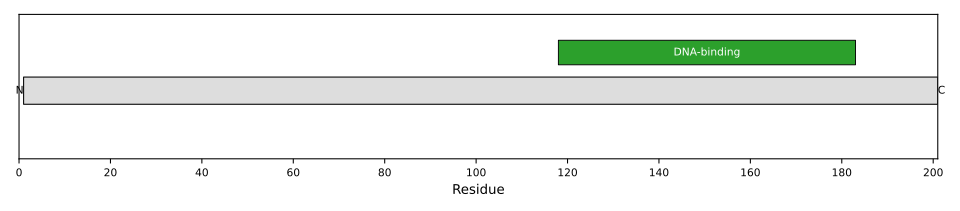
1: Plays an important role in meiotic recombination. Stimulates DMC1-mediated strand exchange required for pairing homologous chromosomes during meiosis. The complex PSMC3IP/MND1 binds DNA, stimulates the recombinase activity of DMC1 as well as DMC1 D-loop formation from double-strand DNA. This complex stabilizes presynaptic RAD51 and DMC1 filaments formed on single strand DNA to capture double-strand DNA. This complex stimulates both synaptic and presynaptic critical steps in RAD51 and DMC1-promoted homologous pairing. May inhibit HIV-1 viral protein TAT activity and modulate the activity of proteasomes through association with PSMC3. Acts as a tissue specific coactivator of hormone-dependent transcription mediated by nuclear receptors