Protein IMPACT (Imprinted and ancient gene protein homolog)
1_MAEGD 6_ AGSDQ 11_ RQNEE 16_ IEAMA 21_ AIYGE 26_ EWCVI 31_ DDCAK 36_ IFCIR 41_ ISDDI 46_ DDPKW 51_ TLCLQ 56_ VMLPN 61_ EYPGT 66_ APPIY 71_ QLNAP 76_ WLKGQ 81_ ERADL 86_ SNSLE 91_ EIYIQ 96_ NIGES 101_ ILYLW 106_ VEKIR 111_ DVLIQ 116_ KSQMT 121_ EPGPD 126_ VKKKT 131_ EEEDV 136_ ECEDD 141_ LILAC 146_ QPESS 151_ LKALD 156_ FDISE 161_ TRTEV 166_ EVEEL 171_ PPIDH 176_ GIPIT 181_ DRRST 186_ FQAHL 191_ APVVC 196_ PKQVK 201_ MVLSK 206_ LYENK 211_ KIASA 216_ THNIY 221_ AYRIY 226_ CEDKQ 231_ TFLQD 236_ CEDDG 241_ ETAAG 246_ GRLLH 251_ LMEIL 256_ NVKNV 261_ MVVVS 266_ RWYGG 271_ ILLGP 276_ DRFKH 281_ INNCA 286_ RNILV 291_ EKNYT 296_ NSPEE 301_ SSKAL 306_ GKNKK 311_VRKDK
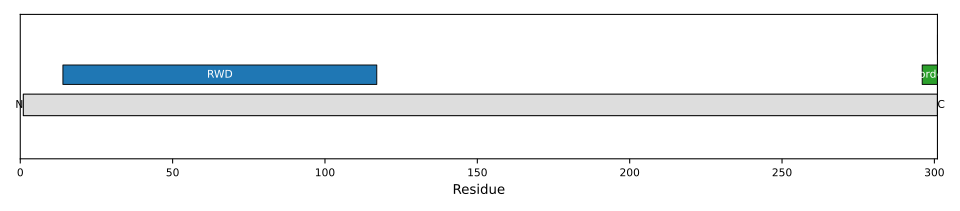
1: Translational regulator that ensures constant high levels of translation upon a variety of stress conditions, such as amino acid starvation, UV-C irradiation, proteasome inhibitor treatment and glucose deprivation. Plays a role as a negative regulator of the EIF2AK4/GCN2 kinase activity; impairs GCN1-mediated EIF2AK4/GCN2 activation, and hence EIF2AK4/GCN2-mediated eIF-2-alpha phosphorylation and subsequent down-regulation of protein synthesis. May be required to regulate translation in specific neuronal cells under amino acid starvation conditions by preventing GCN2 activation and therefore ATF4 synthesis. Through its inhibitory action on EIF2AK4/GCN2, plays a role in differentiation of neuronal cells by stimulating neurite outgrowth