Hematopoietic cell signal transducer (DNAX-activation protein 10) (Membrane protein DAP10) (Transmembrane adapter protein KAP10)
1_MIHLG 6_ HILFL 11_ LLLPV 16_ AAAQT 21_ TPGER 26_ SSLPA 31_ FYPGT 36_ SGSCS 41_ GCGSL 46_ SLPLL 51_ AGLVA 56_ ADAVA 61_ SLLIV 66_ GAVFL 71_ CARPR 76_ RSPAQ 81_ EDGKV 86_YINMP
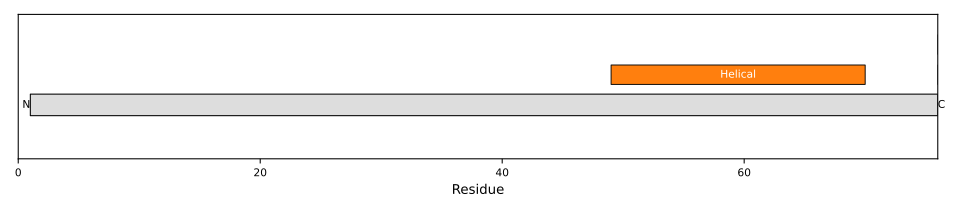
1: Transmembrane adapter protein which associates with KLRK1 to form an activation receptor KLRK1-HCST in lymphoid and myeloid cells; this receptor plays a major role in triggering cytotoxicity against target cells expressing cell surface ligands such as MHC class I chain-related MICA and MICB, and UL16-binding proteins (ULBPs); these ligands are up-regulated by stress conditions and pathological state such as viral infection and tumor transformation. Functions as a docking site for PI3-kinase PIK3R1 and GRB2. Interaction of ULBPs with KLRK1-HCST triggers calcium mobilization and activation of the PIK3R1, MAP2K/ERK, and JAK2/STAT5 signaling pathways. Both PIK3R1 and GRB2 are required for full KLRK1-HCST-mediated activation and ultimate killing of target cells. In NK cells, KLRK1-HCST signaling directly induces cytotoxicity and enhances cytokine production initiated via DAP12/TYROBP-associated receptors. In T-cells, it provides primarily costimulation for TCR-induced signals. KLRK1-HCST receptor plays a role in immune surveillance against tumors and is required for cytolysis of tumors cells; indeed, melanoma cells that do not express KLRK1 ligands escape from immune surveillance mediated by NK cells