Acid-sensing ion channel 3 (ASIC3) (hASIC3) (Amiloride-sensitive cation channel 3) (Neuronal amiloride-sensitive cation channel 3) (Testis sodium channel 1) (hTNaC1)
1_MKPTS 6_ GPEEA 11_ RRPAS 16_ DIRVF 21_ ASNCS 26_ MHGLG 31_ HVFGP 36_ GSLSL 41_ RRGMW 46_ AAAVV 51_ LSVAT 56_ FLYQV 61_ AERVR 66_ YYREF 71_ HHQTA 76_ LDERE 81_ SHRLI 86_ FPAVT 91_ LCNIN 96_ PLRRS 101_ RLTPN 106_ DLHWA 111_ GSALL 116_ GLDPA 121_ EHAAF 126_ LRALG 131_ RPPAP 136_ PGFMP 141_ SPTFD 146_ MAQLY 151_ ARAGH 156_ SLDDM 161_ LLDCR 166_ FRGQP 171_ CGPEN 176_ FTTIF 181_ TRMGK 186_ CYTFN 191_ SGADG 196_ AELLT 201_ TTRGG 206_ MGNGL 211_ DIMLD 216_ VQQEE 221_ YLPVW 226_ RDNEE 231_ TPFEV 236_ GIRVQ 241_ IHSQE 246_ EPPII 251_ DQLGL 256_ GVSPG 261_ YQTFV 266_ SCQQQ 271_ QLSFL 276_ PPPWG 281_ DCSSA 286_ SLNPN 291_ YEPEP 296_ SDPLG 301_ SPSPS 306_ PSPPY 311_ TLMGC 316_ RLACE 321_ TRYVA 326_ RKCGC 331_ RMVYM 336_ PGDVP 341_ VCSPQ 346_ QYKNC 351_ AHPAI 356_ DAMLR 361_ KDSCA 366_ CPNPC 371_ ASTRY 376_ AKELS 381_ MVRIP 386_ SRAAA 391_ RFLAR 396_ KLNRS 401_ EAYIA 406_ ENVLA 411_ LDIFF 416_ EALNY 421_ ETVEQ 426_ KKAYE 431_ MSELL 436_ GDIGG 441_ QMGLF 446_ IGASL 451_ LTILE 456_ ILDYL 461_ CEVFR 466_ DKVLG 471_ YFWNR 476_ QHSQR 481_ HSSTN 486_ LLQEG 491_ LGSHR 496_ TQVPH 501_ LSLGP 506_ RPPTP 511_ PCAVT 516_ KTLSA 521_ SHRTC 526_YLVTQ
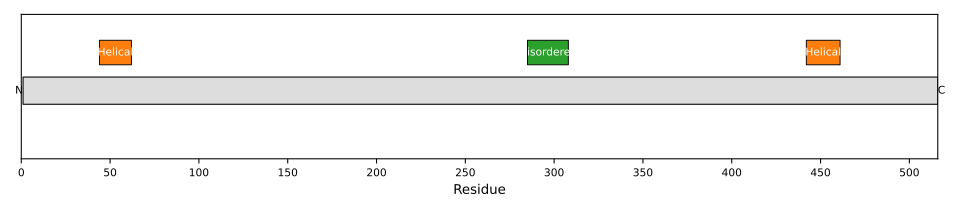
1: Forms pH-gated heterotrimeric sodium channels that act as postsynaptic excitatory receptors in the nervous system (PubMed:10842183, PubMed:11587714, PubMed:9744806, PubMed:9886053). Upon extracellular acidification, these channels generate a biphasic current with a fast inactivating and a slow sustained phase (PubMed:10842183, PubMed:9744806, PubMed:9886053). ASIC3 is more sensitive to protons and gates between closed, open, and desensitized states faster than other ASICs (By similarity). Displays high selectivity for sodium ions but can also permit the permeation of other cations (PubMed:9744806, PubMed:9886053). As a neuronal acid sensor, probably contributes to mechanoreception, acid nociception, and heat nociception (By similarity). By forming heterotrimeric channels with ASIC2, generates a biphasic current with a fast inactivating and a slow sustained phase, which in sensory neurons is proposed to mediate the pain induced by acidosis that occurs in ischemic, damaged or inflamed tissues (By similarity)