N-acetyltransferase 8 (EC 2.3.1.-) (Acetyltransferase 2) (ATase2) (Camello-like protein 1) (Cysteinyl-conjugate N-acetyltransferase) (CCNAT) (EC 2.3.1.80)
1_MAPCH 6_ IRKYQ 11_ ESDRQ 16_ WVVGL 21_ LSRGM 26_ AEHAP 31_ ATFRQ 36_ LLKLP 41_ RTLIL 46_ LLGGP 51_ LALLL 56_ VSGSW 61_ LLALV 66_ FSISL 71_ FPALW 76_ FLAKK 81_ PWTEY 86_ VDMTL 91_ CTDMS 96_ DITKS 101_ YLSER 106_ GSCFW 111_ VAESE 116_ EKVVG 121_ MVGAL 126_ PVDDP 131_ TLREK 136_ RLQLF 141_ HLFVD 146_ SEHRR 151_ QGIAK 156_ ALVRT 161_ VLQFA 166_ RDQGY 171_ SEVIL 176_ DTGTI 181_ QLSAM 186_ ALYQS 191_ MGFKK 196_ TGQSF 201_ FCVWA 206_ RLVAL 211_ HTVHF 216_ IYHLP 221_SSKVG
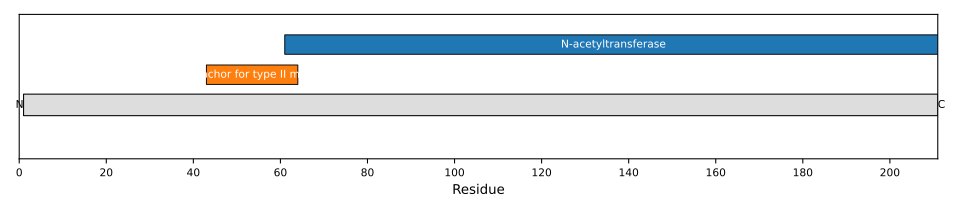
1: Endoplasmic reticulum (ER)-membrane-bound lysine N-acetyltransferase catalyzing the N6-acetylation of lysine residues in the lumen of the ER in various proteins, including PROM1 and BACE1, using acetyl-CoA as acetyl donor (PubMed:19011241, PubMed:22267734, PubMed:24556617, PubMed:31945187). Thereby, may regulate apoptosis through the acetylation and the regulation of the expression of PROM1 (PubMed:24556617). May also regulate amyloid beta-peptide secretion through acetylation of BACE1 and the regulation of its expression in neurons (PubMed:19011241). N(6)-lysine acetylation in the ER maintains protein homeostasis and regulates reticulophagy (By similarity). Alternatively, acetylates the free alpha-amino group of cysteine S-conjugates to form mercapturic acids (PubMed:20392701). This is the final step in a major route for detoxification of a wide variety of reactive electrophiles which starts with their incorporation into glutathione S-conjugates. The glutathione S-conjugates are then further processed into cysteine S-conjugates and finally mercapturic acids which are water soluble and can be readily excreted in urine or bile