Paired immunoglobulin-like type 2 receptor alpha (Cell surface receptor FDF03) (Inhibitory receptor PILR-alpha)
1_MGRPL 6_ LLPLL 11_ PLLLP 16_ PAFLQ 21_ PSGST 26_ GSGPS 31_ YLYGV 36_ TQPKH 41_ LSASM 46_ GGSVE 51_ IPFSF 56_ YYPWE 61_ LATAP 66_ DVRIS 71_ WRRGH 76_ FHRQS 81_ FYSTR 86_ PPSIH 91_ KDYVN 96_ RLFLN 101_ WTEGQ 106_ KSGFL 111_ RISNL 116_ QKQDQ 121_ SVYFC 126_ RVELD 131_ TRSSG 136_ RQQWQ 141_ SIEGT 146_ KLSIT 151_ QAVTT 156_ TTQRP 161_ SSMTT 166_ TWRLS 171_ STTTT 176_ TGLRV 181_ TQGKR 186_ RSDSW 191_ HISLE 196_ TAVGV 201_ AVAVT 206_ VLGIM 211_ ILGLI 216_ CLLRW 221_ RRRKG 226_ QQRTK 231_ ATTPA 236_ REPFQ 241_ NTEEP 246_ YENIR 251_ NEGQN 256_ TDPKL 261_ NPKDD 266_ GIVYA 271_ SLALS 276_ SSTSP 281_ RAPPS 286_ HRPLK 291_ SPQNE 296_TLYSV
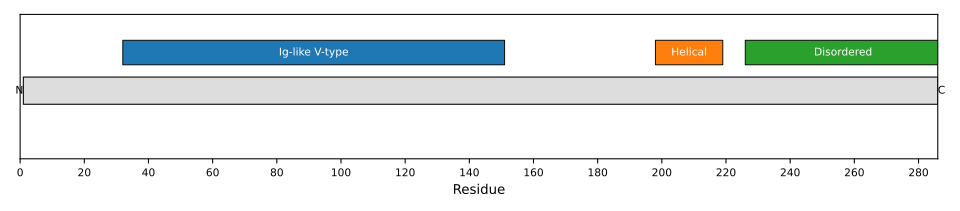
1: Paired receptors consist of highly related activating and inhibitory receptors and are widely involved in the regulation of the immune system. PILRA is thought to act as a cellular signaling inhibitory receptor by recruiting cytoplasmic phosphatases like PTPN6/SHP-1 and PTPN11/SHP-2 via their SH2 domains that block signal transduction through dephosphorylation of signaling molecules. Receptor for PIANP
2: (Microbial infection) Acts as an entry co-receptor for herpes simplex virus 1