C-type lectin domain family 4 member E (C-type lectin superfamily member 9) (Macrophage-inducible C-type lectin) (MINCLE)
1_MNSSK 6_ SSETQ 11_ CTERG 16_ CFSSQ 21_ MFLWT 26_ VAGIP 31_ ILFLS 36_ ACFIT 41_ RCVVT 46_ FRIFQ 51_ TCDEK 56_ KFQLP 61_ ENFTE 66_ LSCYN 71_ YGSGS 76_ VKNCC 81_ PLNWE 86_ YFQSS 91_ CYFFS 96_ TDTIS 101_ WALSL 106_ KNCSA 111_ MGAHL 116_ VVINS 121_ QEEQE 126_ FLSYK 131_ KPKMR 136_ EFFIG 141_ LSDQV 146_ VEGQW 151_ QWVDG 156_ TPLTK 161_ SLSFW 166_ DVGEP 171_ NNIAT 176_ LEDCA 181_ TMRDS 186_ SNPRQ 191_ NWNDV 196_ TCFLN 201_ YFRIC 206_ EMVGI 211_NPLNK
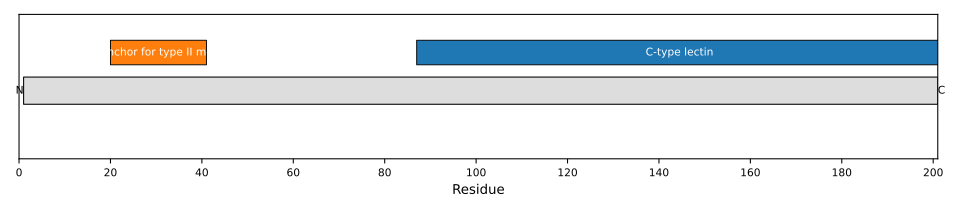
1: Calcium-dependent lectin that acts as a pattern recognition receptor (PRR) of the innate immune system: recognizes damage-associated molecular patterns (DAMPs) of abnormal self and pathogen-associated molecular patterns (PAMPs) of bacteria and fungi (PubMed:18509109, PubMed:23602766). The PAMPs notably include mycobacterial trehalose 6,6'-dimycolate (TDM), a cell wall glycolipid with potent adjuvant immunomodulatory functions (PubMed:23602766, PubMed:24101491). Interacts with signaling adapter Fc receptor gamma chain/FCER1G to form a functional complex in myeloid cells (By similarity). Binding of mycobacterial trehalose 6,6'-dimycolate (TDM) to this receptor complex leads to phosphorylation of the immunoreceptor tyrosine-based activation motif (ITAM) of FCER1G, triggering activation of SYK, CARD9 and NF-kappa-B, consequently driving maturation of antigen-presenting cells and shaping antigen-specific priming of T-cells toward effector T-helper 1 and T-helper 17 cell subtypes (By similarity). Also recognizes alpha-mannose residues on pathogenic fungi of the genus Malassezia and mediates macrophage activation (By similarity). Through recognition of DAMPs released upon nonhomeostatic cell death, enables immune sensing of damaged self and promotes inflammatory cell infiltration into the damaged tissue (By similarity)