Apelin (APJ endogenous ligand) [Cleaved into: Apelin-36; Apelin-31; Apelin-28; Apelin-13]
1_MNLRL 6_ CVQAL 11_ LLLWL 16_ SLTAV 21_ CGGSL 26_ MPLPD 31_ GNGLE 36_ DGNVR 41_ HLVQP 46_ RGSRN 51_ GPGPW 56_ QGGRR 61_ KFRRQ 66_ RPRLS 71_HKGPM
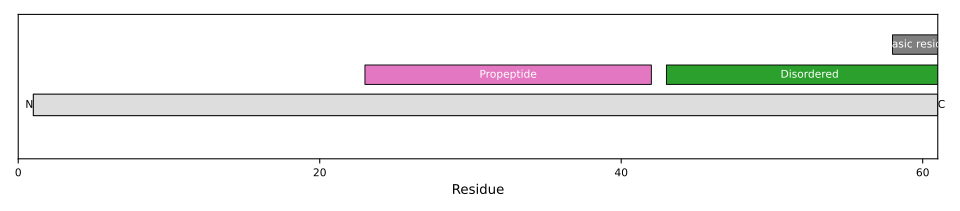
1: Peptide hormone that functions as endogenous ligand for the G-protein-coupled apelin receptor (APLNR/APJ), that plays a role in cadiovascular homeostasis (PubMed:10525157, PubMed:22810587, PubMed:35817871, PubMed:38428423). Functions as a balanced agonist activating both G(i) protein pathway and beta-arrestin pathway of APLNR (PubMed:22810587, PubMed:38428423). Downstream G proteins activation, apelin can inhibit cAMP production and activate key intracellular effectors such as ERKs (PubMed:22810587, PubMed:35817871, PubMed:38428423). On the other hand, APLNR activation induces beta-arrestin recruitment to the membrane leading to desensitization and internalization of the receptor (PubMed:22810587, PubMed:38428423). Apelin blunts cardiac hypertrophic induction from APLNR on response to pathological stimuli, but also induces myocardial hypertrophy under normal conditions (PubMed:22810587, PubMed:38428423). Apelin-36 dissociates more hardly than (pyroglu)apelin-13 from APLNR (By similarity). Involved in the regulation of cardiac precursor cell movements during gastrulation and heart morphogenesis (By similarity). Has an inhibitory effect on cytokine production in response to T-cell receptor/CD3 cross-linking; the oral intake of apelin in the colostrum and the milk might therefore modulate immune responses in neonates (By similarity). Plays a role in early coronary blood vessels formation (By similarity). Mediates myocardial contractility in an ERK1/2-dependent manner (By similarity). May also have a role in the central control of body fluid homeostasis by influencing vasopressin release and drinking behavior (By similarity)
2: (Microbial infection) Endogenous ligand for the apelin receptor (APLNR), an alternative coreceptor with CD4 for HIV-1 infection (PubMed:11090199). Inhibits HIV-1 entry in cells coexpressing CD4 and APLNR (PubMed:11090199). Apelin-36 has a greater inhibitory activity on HIV infection than other synthetic apelin derivatives (PubMed:11090199)