DNA-binding protein SATB2 (Special AT-rich sequence-binding protein 2)
1_MERRS 6_ ESPCL 11_ RDSPD 16_ RRSGS 21_ PDVKG 26_ PPPVK 31_ VARLE 36_ QNGSP 41_ MGARG 46_ RPNGA 51_ VAKAV 56_ GGLMI 61_ PVFCV 66_ VEQLD 71_ GSLEY 76_ DNREE 81_ HAEFV 86_ LVRKD 91_ VLFSQ 96_ LVETA 101_ LLALG 106_ YSHSS 111_ AAQAQ 116_ GIIKL 121_ GRWNP 126_ LPLSY 131_ VTDAP 136_ DATVA 141_ DMLQD 146_ VYHVV 151_ TLKIQ 156_ LQSCS 161_ KLEDL 166_ PAEQW 171_ NHATV 176_ RNALK 181_ ELLKE 186_ MNQST 191_ LAKEC 196_ PLSQS 201_ MISSI 206_ VNSTY 211_ YANVS 216_ ATKCQ 221_ EFGRW 226_ YKKYK 231_ KIKVE 236_ RVERE 241_ NLSDY 246_ CVLGQ 251_ RPMHL 256_ PNMNQ 261_ LASLG 266_ KTNEQ 271_ SPHSQ 276_ IHHST 281_ PIRNQ 286_ VPALQ 291_ PIMSP 296_ GLLSP 301_ QLSPQ 306_ LVRQQ 311_ IAMAH 316_ LINQQ 321_ IAVSR 326_ LLAHQ 331_ HPQAI 336_ NQQFL 341_ NHPPI 346_ PRAVK 351_ PEPTN 356_ SSVEV 361_ SPDIY 366_ QQVRD 371_ ELKRA 376_ SVSQA 381_ VFARV 386_ AFNRT 391_ QGLLS 396_ EILRK 401_ EEDPR 406_ TASQS 411_ LLVNL 416_ RAMQN 421_ FLNLP 426_ EVERD 431_ RIYQD 436_ ERERS 441_ MNPNV 446_ SMVSS 451_ ASSSP 456_ SSSRT 461_ PQAKT 466_ STPTT 471_ DLPIK 476_ VDGAN 481_ INITA 486_ AIYDE 491_ IQQEM 496_ KRAKV 501_ SQALF 506_ AKVAA 511_ NKSQG 516_ WLCEL 521_ LRWKE 526_ NPSPE 531_ NRTLW 536_ ENLCT 541_ IRRFL 546_ NLPQH 551_ ERDVI 556_ YEEES 561_ RHHHS 566_ ERMQH 571_ VVQLP 576_ PEPVQ 581_ VLHRQ 586_ QSQPA 591_ KESSP 596_ PREEA 601_ PPPPP 606_ PTEDS 611_ CAKKP 616_ RSRTK 621_ ISLEA 626_ LGILQ 631_ SFIHD 636_ VGLYP 641_ DQEAI 646_ HTLSA 651_ QLDLP 656_ KHTII 661_ KFFQN 666_ QRYHV 671_ KHHGK 676_ LKEHL 681_ GSAVD 686_ VAEYK 691_ DEELL 696_ TESEE 701_ NDSEE 706_ GSEEM 711_ YKVEA 716_ EEENA 721_ DKSKA 726_APAEI
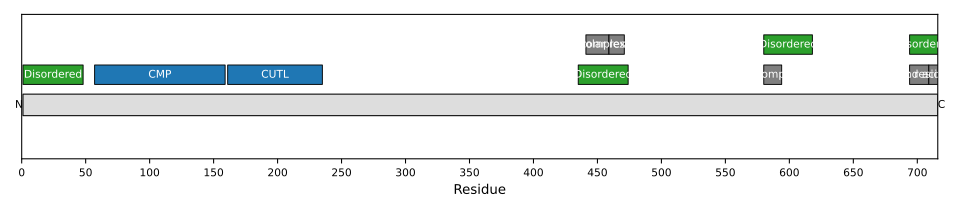
1: Binds to DNA, at nuclear matrix- or scaffold-associated regions. Thought to recognize the sugar-phosphate structure of double-stranded DNA. Transcription factor controlling nuclear gene expression, by binding to matrix attachment regions (MARs) of DNA and inducing a local chromatin-loop remodeling. Acts as a docking site for several chromatin remodeling enzymes and also by recruiting corepressors (HDACs) or coactivators (HATs) directly to promoters and enhancers. Required for the initiation of the upper-layer neurons (UL1) specific genetic program and for the inactivation of deep-layer neurons (DL) and UL2 specific genes, probably by modulating BCL11B expression. Repressor of Ctip2 and regulatory determinant of corticocortical connections in the developing cerebral cortex. May play an important role in palate formation. Acts as a molecular node in a transcriptional network regulating skeletal development and osteoblast differentiation