G-protein coupled receptor 55
1_MSQQN 6_ TSGDC 11_ LFDGV 16_ NELMK 21_ TLQFA 26_ VHIPT 31_ FVLGL 36_ LLNLL 41_ AIHGF 46_ STFLK 51_ NRWPD 56_ YAATS 61_ IYMIN 66_ LAVFD 71_ LLLVL 76_ SLPFK 81_ MVLSQ 86_ VQSPF 91_ PSLCT 96_ LVECL 101_ YFVSM 106_ YGSVF 111_ TICFI 116_ SMDRF 121_ LAIRY 126_ PLLVS 131_ HLRSP 136_ RKIFG 141_ ICCTI 146_ WVLVW 151_ TGSIP 156_ IYSFH 161_ GKVEK 166_ YMCFH 171_ NMSDD 176_ TWSAK 181_ VFFPL 186_ EVFGF 191_ LLPMG 196_ IMGFC 201_ CSRSI 206_ HILLG 211_ RRDHT 216_ QDWVQ 221_ QKACI 226_ YSIAA 231_ SLAVF 236_ VVSFL 241_ PVHLG 246_ FFLQF 251_ LVRNS 256_ FIVEC 261_ RAKQS 266_ ISFFL 271_ QLSMC 276_ FSNVN 281_ CCLDV 286_ FCYYF 291_ VIKEF 296_ RMNIR 301_ AHRPS 306_ RVQLV 311_LQDTT
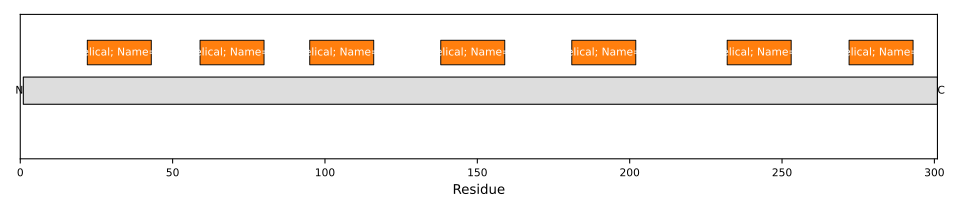
1: G-protein coupled receptor that binds to several ligands including 2-arachidonoyl lysophosphatidylinositol or lysophosphatidylglucoside with high affinity, leading to rapid and transient activation of numerous intracellular signaling pathways (PubMed:36142844, PubMed:36523570, PubMed:37544935). Induces the Ca(2+) release from intracellular stores via ERK, the heterotrimeric G protein GNA13 and RHOA leading to morphological changes including cell rounding and stress fiber formation (PubMed:36142844). In macrophages, acts downstream of lysophosphatidylglucoside to inhibit the translocation of the phospholipid-transporting ABCA1 to plasma membrane and subsequent cholesterol efflux leading to lipid accumulation and foam cell formation (PubMed:37544935)