Palmitoyltransferase ZDHHC9 (EC 2.3.1.225) (Zinc finger DHHC domain-containing protein 9) (DHHC-9) (DHHC9) (Zinc finger protein 379) (Zinc finger protein 380)
1_MSVMV 6_ VRKKV 11_ TRKWE 16_ KLPGR 21_ NTFCC 26_ DGRVM 31_ MARQK 36_ GIFYL 41_ TLFLI 46_ LGTCT 51_ LFFAF 56_ ECRYL 61_ AVQLS 66_ PAIPV 71_ FAAML 76_ FLFSM 81_ ATLLR 86_ TSFSD 91_ PGVIP 96_ RALPD 101_ EAAFI 106_ EMEIE 111_ ATNGA 116_ VPQGQ 121_ RPPPR 126_ IKNFQ 131_ INNQI 136_ VKLKY 141_ CYTCK 146_ IFRPP 151_ RASHC 156_ SICDN 161_ CVERF 166_ DHHCP 171_ WVGNC 176_ VGKRN 181_ YRYFY 186_ LFILS 191_ LSLLT 196_ IYVFA 201_ FNIVY 206_ VALKS 211_ LKIGF 216_ LETLK 221_ ETPGT 226_ VLEVL 231_ ICFFT 236_ LWSVV 241_ GLTGF 246_ HTFLV 251_ ALNQT 256_ TNEDI 261_ KGSWT 266_ GKNRV 271_ QNPYS 276_ HGNIV 281_ KNCCE 286_ VLCGP 291_ LPPSV 296_ LDRRG 301_ ILPLE 306_ ESGSR 311_ PPSTQ 316_ ETSSS 321_ LLPQS 326_ PAPTE 331_ HLNSN 336_ EMPED 341_ SSTPE 346_ EMPPP 351_ EPPEP 356_PQEAA
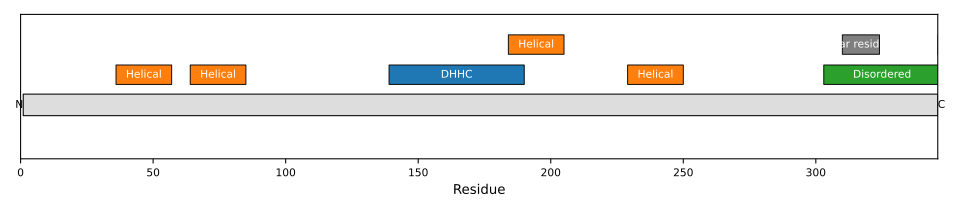
1: Palmitoyltransferase that catalyzes the addition of palmitate onto various protein substrates, such as ADRB2, GSDMD, HRAS, NRAS and CGAS (PubMed:16000296, PubMed:27481942, PubMed:37802025, PubMed:38530158, PubMed:38599239). The ZDHHC9-GOLGA7 complex is a palmitoyltransferase specific for HRAS and NRAS (PubMed:16000296). May have a palmitoyltransferase activity toward the beta-2 adrenergic receptor/ADRB2 and therefore regulate G protein-coupled receptor signaling (PubMed:27481942). Acts as a regulator of innate immunity by catalyzing palmitoylation of CGAS, thereby promoting CGAS homodimerization and cyclic GMP-AMP synthase activity (PubMed:37802025). Activates pyroptosis by catalyzing palmitoylation of gasdermin-D (GSDMD), thereby promoting membrane translocation and pore formation of GSDMD (PubMed:38530158, PubMed:38599239)
2: (Microbial infection) Through a sequential action with ZDHHC20, rapidly and efficiently palmitoylates SARS coronavirus-2/SARS-CoV-2 spike protein following its synthesis in the endoplasmic reticulum (ER). In the infected cell, promotes spike biogenesis by protecting it from premature ER degradation, increases half-life and controls the lipid organization of its immediate membrane environment. Once the virus has formed, spike palmitoylation controls fusion with the target cell