Plakophilin-3
1_MQDGN 6_ FLLSA 11_ LQPEA 16_ GVCSL 21_ ALPSD 26_ LQLDR 31_ RGAEG 36_ PEAER 41_ LRAAR 46_ VQEQV 51_ RARLL 56_ QLGQQ 61_ PRHNG 66_ AAEPE 71_ PEAET 76_ ARGTS 81_ RGQYH 86_ TLQAG 91_ FSSRS 96_ QGLSG 101_ DKTSG 106_ FRPIA 111_ KPAYS 116_ PASWS 121_ SRSAV 126_ DLSCS 131_ RRLSS 136_ AHNGG 141_ SAFGA 146_ AGYGG 151_ AQPTP 156_ PMPTR 161_ PVSFH 166_ ERGGV 171_ GSRAD 176_ YDTLS 181_ LRSLR 186_ LGPGG 191_ LDDRY 196_ SLVSE 201_ QLEPA 206_ ATSTY 211_ RAFAY 216_ ERQAS 221_ SSSSR 226_ AGGLD 231_ WPEAT 236_ EVSPS 241_ RTIRA 246_ PAVRT 251_ LQRFQ 256_ SSHRS 261_ RGVGG 266_ AVPGA 271_ VLEPV 276_ ARAPS 281_ VRSLS 286_ LSLAD 291_ SGHLP 296_ DVHGF 301_ NSYGS 306_ HRTLQ 311_ RLSSG 316_ FDDID 321_ LPSAV 326_ KYLMA 331_ SDPNL 336_ QVLGA 341_ AYIQH 346_ KCYSD 351_ AAAKK 356_ QARSL 361_ QAVPR 366_ LVKLF 371_ NHANQ 376_ EVQRH 381_ ATGAM 386_ RNLIY 391_ DNADN 396_ KLALV 401_ EENGI 406_ FELLR 411_ TLREQ 416_ DDELR 421_ KNVTG 426_ ILWNL 431_ SSSDH 436_ LKDRL 441_ ARDTL 446_ EQLTD 451_ LVLSP 456_ LSGAG 461_ GPPLI 466_ QQNAS 471_ EAEIF 476_ YNATG 481_ FLRNL 486_ SSASQ 491_ ATRQK 496_ MRECH 501_ GLVDA 506_ LVTSI 511_ NHALD 516_ AGKCE 521_ DKSVE 526_ NAVCV 531_ LRNLS 536_ YRLYD 541_ EMPPS 546_ ALQRL 551_ EGRGR 556_ RDLAG 561_ APPGE 566_ VVGCF 571_ TPQSR 576_ RLREL 581_ PLAAD 586_ ALTFA 591_ EVSKD 596_ PKGLE 601_ WLWSP 606_ QIVGL 611_ YNRLL 616_ QRCEL 621_ NRHTT 626_ EAAAG 631_ ALQNI 636_ TAGDR 641_ RWAGV 646_ LSRLA 651_ LEQER 656_ ILNPL 661_ LDRVR 666_ TADHH 671_ QLRSL 676_ TGLIR 681_ NLSRN 686_ ARNKD 691_ EMSTK 696_ VVSHL 701_ IEKLP 706_ GSVGE 711_ KSPPA 716_ EVLVN 721_ IIAVL 726_ NNLVV 731_ ASPIA 736_ ARDLL 741_ YFDGL 746_ RKLIF 751_ IKKKR 756_ DSPDS 761_ EKSSR 766_ AASSL 771_ LANLW 776_ QYNKL 781_ HRDFR 786_ AKGYR 791_KEDFL
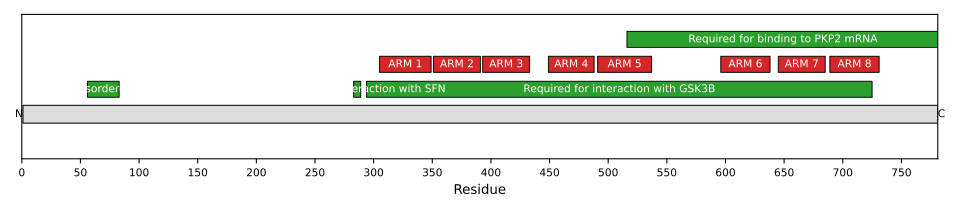
1: A component of desmosome cell-cell junctions which are required for positive regulation of cellular adhesion (PubMed:24124604). Required for the localization of DSG2, DSP and PKP2 to mature desmosome junctions (PubMed:20859650). May also play a role in the maintenance of DSG3 protein abundance in keratinocytes (By similarity). Required for the formation of DSP-containing desmosome precursors in the cytoplasm during desmosome assembly (PubMed:25208567). Also regulates the accumulation of CDH1 to mature desmosome junctions, via cAMP-dependent signaling and its interaction with activated RAP1A (PubMed:25208567). Positively regulates the stabilization of PKP2 mRNA and therefore protein abundance, via its interaction with FXR1, may also regulate the protein abundance of DSP via the same mechanism (PubMed:25225333). May also regulate the protein abundance of the desmosome component PKP1 (By similarity). Required for the organization of desmosome junctions at intercellular borders between basal keratinocytes of the epidermis, as a result plays a role in maintenance of the dermal barrier and regulation of the dermal inflammatory response (By similarity). Required during epidermal keratinocyte differentiation for cell adherence at tricellular cell-cell contacts, via regulation of the timely formation of adherens junctions and desmosomes in a calcium-dependent manner, and may also play a role in the organization of the intracellular actin fiber belt (By similarity). Acts as a negative regulator of the inflammatory response in hematopoietic cells of the skin and intestine, via modulation of proinflammatory cytokine production (By similarity). Important for epithelial barrier maintenance in the intestine to reduce intestinal permeability, thereby plays a role in protection from intestinal-derived endotoxemia (By similarity). Required for the development of hair follicles, via a role in the regulation of inner root sheaf length, correct alignment and anterior-posterior polarity of hair follicles (By similarity). Promotes proliferation and cell-cycle G1/S phase transition of keratinocytes (By similarity). Promotes E2F1-driven transcription of G1/S phase promoting genes by acting to release E2F1 from its inhibitory interaction with RB1, via sequestering RB1 and CDKN1A to the cytoplasm and thereby increasing CDK4- and CDK6-driven phosphorylation of RB1 (By similarity). May act as a scaffold protein to facilitate MAPK phosphorylation of RPS6KA protein family members and subsequently promote downstream EGFR signaling (By similarity). May play a role in the positive regulation of transcription of Wnt-mediated TCF-responsive target genes (PubMed:34058472)