Insulin-induced gene 2 protein (INSIG-2)
1_MAEGE 6_ TESPG 11_ PKKCG 16_ PYISS 21_ VTSQS 26_ VNLMI 31_ RGVVL 36_ FFIGV 41_ FLALV 46_ LNLLQ 51_ IQRNV 56_ TLFPP 61_ DVIAS 66_ IFSSA 71_ WWVPP 76_ CCGTA 81_ SAVIG 86_ LLYPC 91_ IDRHL 96_ GEPHK 101_ FKREW 106_ SSVMR 111_ CVAVF 116_ VGINH 121_ ASAKV 126_ DFDNN 131_ IQLSL 136_ TLAAL 141_ SIGLW 146_ WTFDR 151_ SRSGF 156_ GLGVG 161_ IAFLA 166_ TVVTQ 171_ LLVYN 176_ GVYQY 181_ TSPDF 186_ LYVRS 191_ WLPCI 196_ FFAGG 201_ ITMGN 206_ IGRQL 211_ AMYEC 216_KVIAE
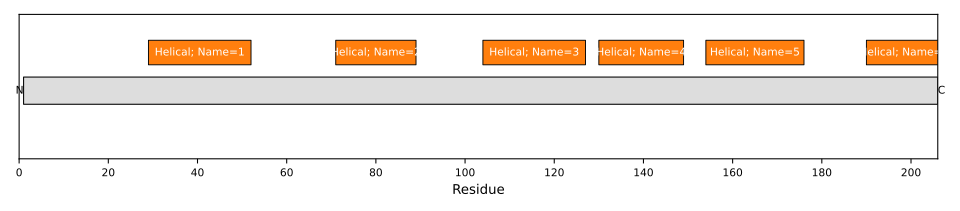
1: Oxysterol-binding protein that mediates feedback control of cholesterol synthesis by controlling both endoplasmic reticulum to Golgi transport of SCAP and degradation of HMGCR (PubMed:12242332, PubMed:16606821, PubMed:32322062). Acts as a negative regulator of cholesterol biosynthesis by mediating the retention of the SCAP-SREBP complex in the endoplasmic reticulum, thereby blocking the processing of sterol regulatory element-binding proteins (SREBPs) SREBF1/SREBP1 and SREBF2/SREBP2 (PubMed:32322062). Binds oxysterol, including 22-hydroxycholesterol, 24-hydroxycholesterol, 25-hydroxycholesterol and 27-hydroxycholesterol, regulating interaction with SCAP and retention of the SCAP-SREBP complex in the endoplasmic reticulum (PubMed:17428920, PubMed:26160948, PubMed:32322062). In presence of oxysterol, interacts with SCAP, retaining the SCAP-SREBP complex in the endoplasmic reticulum, thereby preventing SCAP from escorting SREBF1/SREBP1 and SREBF2/SREBP2 to the Golgi (PubMed:32322062). Sterol deprivation or phosphorylation by PCK1 reduce oxysterol-binding, disrupting the interaction between INSIG2 and SCAP, thereby promoting Golgi transport of the SCAP-SREBP complex, followed by processing and nuclear translocation of SREBF1/SREBP1 and SREBF2/SREBP2 (PubMed:32322062). Also regulates cholesterol synthesis by regulating degradation of HMGCR: initiates the sterol-mediated ubiquitin-mediated endoplasmic reticulum-associated degradation (ERAD) of HMGCR via recruitment of the reductase to the ubiquitin ligase RNF139 (PubMed:16606821, PubMed:22143767)