Chloride intracellular channel protein 4 (Intracellular chloride ion channel protein p64H1)
1_MALSM 6_ PLNGL 11_ KEEDK 16_ EPLIE 21_ LFVKA 26_ GSDGE 31_ SIGNC 36_ PFSQR 41_ LFMIL 46_ WLKGV 51_ VFSVT 56_ TVDLK 61_ RKPAD 66_ LQNLA 71_ PGTHP 76_ PFITF 81_ NSEVK 86_ TDVNK 91_ IEEFL 96_ EEVLC 101_ PPKYL 106_ KLSPK 111_ HPESN 116_ TAGMD 121_ IFAKF 126_ SAYIK 131_ NSRPE 136_ ANEAL 141_ ERGLL 146_ KTLQK 151_ LDEYL 156_ NSPLP 161_ DEIDE 166_ NSMED 171_ IKFST 176_ RKFLD 181_ GNEMT 186_ LADCN 191_ LLPKL 196_ HIVKV 201_ VAKKY 206_ RNFDI 211_ PKEMT 216_ GIWRY 221_ LTNAY 226_ SRDEF 231_ TNTCP 236_ SDKEV 241_ EIAYS 246_DVAKR
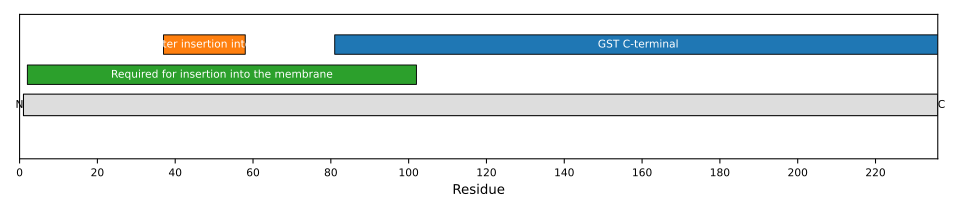
1: In the soluble state, catalyzes glutaredoxin-like thiol disulfide exchange reactions with reduced glutathione as electron donor (PubMed:25581026, PubMed:37759794). Can insert into membranes and form voltage-dependent multi-ion conductive channels. Membrane insertion seems to be redox-regulated and may occur only under oxidizing conditions (By similarity) (PubMed:16176272). Has alternate cellular functions like a potential role in angiogenesis or in maintaining apical-basolateral membrane polarity during mitosis and cytokinesis. Could also promote endothelial cell proliferation and regulate endothelial morphogenesis (tubulogenesis). Promotes cell-surface expression of HRH3