Inducible T-cell costimulator (Activation-inducible lymphocyte immunomediatory molecule) (CD antigen CD278)
1_MKSGL 6_ WYFFL 11_ FCLRI 16_ KVLTG 21_ EINGS 26_ ANYEM 31_ FIFHN 36_ GGVQI 41_ LCKYP 46_ DIVQQ 51_ FKMQL 56_ LKGGQ 61_ ILCDL 66_ TKTKG 71_ SGNTV 76_ SIKSL 81_ KFCHS 86_ QLSNN 91_ SVSFF 96_ LYNLD 101_ HSHAN 106_ YYFCN 111_ LSIFD 116_ PPPFK 121_ VTLTG 126_ GYLHI 131_ YESQL 136_ CCQLK 141_ FWLPI 146_ GCAAF 151_ VVVCI 156_ LGCIL 161_ ICWLT 166_ KKKYS 171_ SSVHD 176_ PNGEY 181_ MFMRA 186_ VNTAK 191_KSRLT
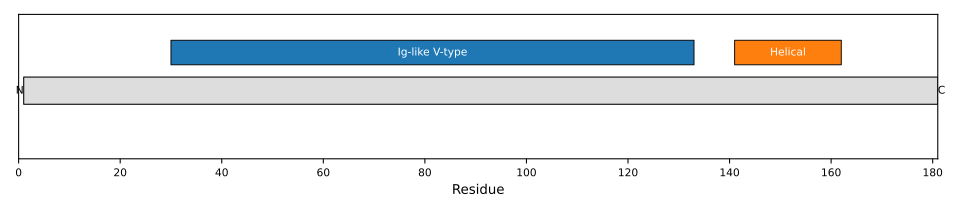
1: Stimulatory receptor expressed in activated or antigen-experienced T-cells that plays an important role in the immune response (PubMed:9930702). Upon binding to its ligand ICOSL expressed on antigen presenting cells (APCs), delivers costimulatory signals that enhances all basic T-cell responses to a foreign antigen, namely proliferation, secretion of lymphokines including IL10, up-regulation of molecules that mediate cell-cell interaction, and effective help for antibody secretion by B-cells (PubMed:33033255). Also acts as a costimulatory receptor critical for the differentiation of T follicular regulatory cells upon immune challenges such as viral infection (PubMed:27135603). Mechanistically, potentiates TCR-induced calcium flux by augmenting PLCG1 activation and actin remodeling (By similarity). In addition, activates PI3K signaling pathways independently of calcium flux (PubMed:30523347). Essential both for efficient interaction between T and B-cells and for normal antibody responses to T-cell dependent antigens. Prevents the apoptosis of pre-activated T-cells. Plays a critical role in CD40-mediated class switching of immunoglobin isotypes (By similarity)